|
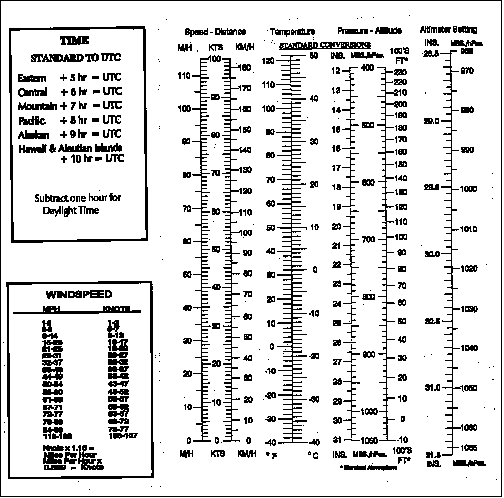
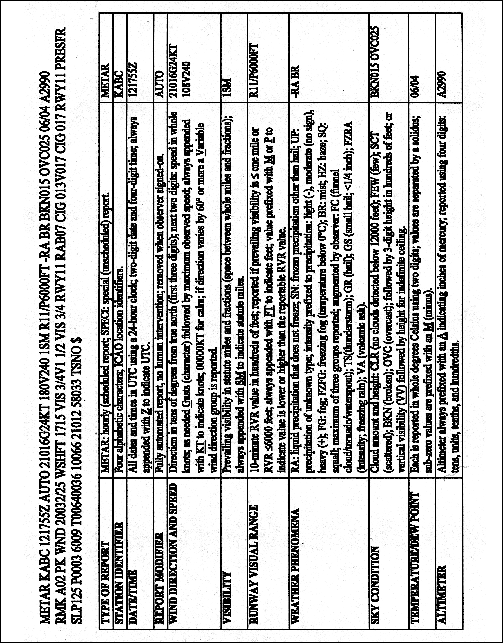
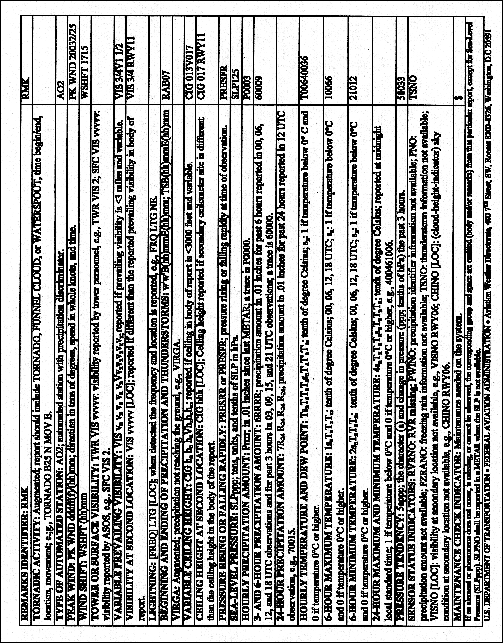
7-1-1. National Weather Service Aviation Products a. Weather service to aviation is a joint effort of the National Weather Service (NWS), the Federal Aviation Administration (FAA), the military weather services, and other aviation oriented groups and individuals. The NWS maintains an extensive surface, upper air, and radar weather observing program; a nationwide aviation weather forecasting service; and provides limited pilot briefing service (interpretational). The majority of pilot weather briefings are provided by FAA personnel at Flight Service Stations (AFSSs/FSSs). Aviation routine weather reports (METAR) are taken manually by NWS, FAA, contractors, or supplemental observers. METAR reports are also provided by Automated Weather Observing System (AWOS) and Automated Surface Observing System (ASOS). REFERENCE- b. Aerodrome forecasts are prepared by approximately 100 Weather Forecast Offices (WFOs). These offices prepare and distribute approximately 525 aerodrome forecasts 4 times daily for specific airports in the 50 States, Puerto Rico, the Caribbean and Pacific Islands. These forecasts are valid for 24 hours and amended as required. WFOs prepare over 300 route forecasts and 39 synopses for Transcribed Weather Broadcasts (TWEB), and briefing purposes. The route forecasts are issued 4 times daily, each forecast is valid for 12 hours. A centralized aviation forecast program originating from the Aviation Weather Center (AWC) in Kansas City was implemented in October 1995. In the conterminous U.S., all Inflight Advisories Significant Meteorological Information (SIGMETs), Convective SIGMETs, and Airmen's Meteorological Information (AIRMETs) and all Area Forecasts (FAs) (6 areas) are now issued by AWC. FAs are prepared 3 times a day in the conterminous U.S. and Alaska (4 times in Hawaii), and amended as required. Inflight Advisories are issued only when conditions warrant. Winds aloft forecasts are provided for 176 locations in the 48 contiguous States and 21 locations in Alaska for flight planning purposes. (Winds aloft forecasts for Hawaii are prepared locally.) All the aviation weather forecasts are given wide distribution through the Weather Message Switching Center Replacement (WMSCR) in Atlanta, Georgia, and Salt Lake City, Utah. REFERENCE- c. Weather element values may be expressed by using different measurement systems depending on several factors, such as whether the weather products will be used by the general public, aviation interests, international services, or a combination of these users. FIG 7-1-1 provides conversion tables for the most used weather elements that will be encountered by pilots. a. The FAA maintains a nationwide network of Automated Flight Service Stations (AFSSs/FSSs) to serve the weather needs of pilots. In addition, NWS meteorologists are assigned to most ARTCCs as part of the Center Weather Service Unit (CWSU). They provide Center Weather Advisories (CWAs) and gather weather information to support the needs of the FAA and other users of the system. b. The primary source of preflight weather briefings is an individual briefing obtained from a briefer at the AFSS/FSS. These briefings, which are tailored to your specific flight, are available 24 hours a day through the use of the toll free number (1-800-WX BRIEF). Numbers for these services can be found in the Airport/Facility Directory (A/FD) under "FAA and NWS Telephone Numbers" section. They may also be listed in the U.S. Government section of your local telephone directory under Department of Transportation, Federal Aviation Administration, or Department of Commerce, National Weather Service. NWS pilot weather briefers do not provide aeronautical information (NOTAMs, flow control advisories, etc.) nor do they accept flight plans. REFERENCE- FIG
7-1-1
|
|||||||||||||||||||||||||||||||||||||||||||||||||||||||||||||||||||||||||||||||||||||||||||||||||||||||||||||||||||||||||||||||||||||||||||||||||||||||||||||||||||||||||||||||||||||||||||||||||||||||||||||||||||||||||||||||||||||||||||||||||||||||||||||||||||||||||||||||||||||||||||||||||||||||||||||||||||||||||||||||||||||||||||||||||||||||||||||||||||||||||||||||||||||||||||||||||||||||||||||||||||||||||||||||||||||||||||||||||||||||||||||||||||||||||||||||||||||||||||||||||||||||||||||||||||||||||||||||||||||||||||||||||||||||||||||||||||||||||||||||||||||||||||||||||||||||||||||||||||||||||||||||||||||||||||||||||||||||||||||||||||||||||
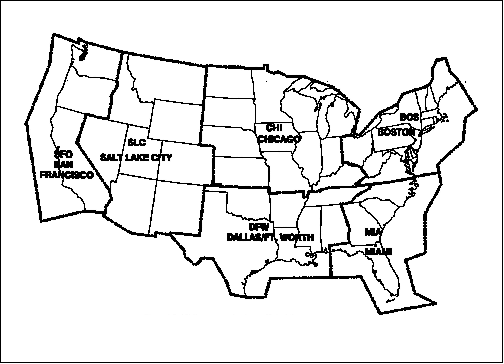
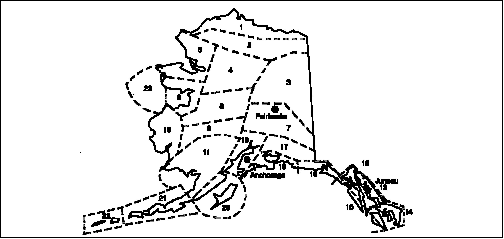
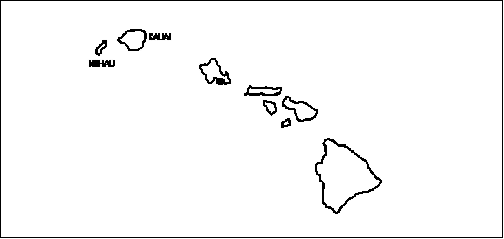
|
Weather Observing Programs |
||||||
|
Element Reported |
AWOS-A |
AWOS-1 |
AWOS-2 |
AWOS-3 |
ASOS |
Manual |
|
Altimeter |
X |
X |
X |
X |
X |
X |
|
Wind |
|
X |
X |
X |
X |
X |
|
Temperature/ |
|
X |
X |
X |
X |
X |
|
Density Altitude |
|
X |
X |
X |
X |
|
|
Visibility |
|
|
X |
X |
X |
X |
|
Clouds/Ceiling |
|
|
|
X |
X |
X |
|
Precipitation |
|
|
|
|
X |
X |
|
Remarks |
|
|
|
|
X |
X |
|
|
|
SERVICE LEVEL A |
|
|||
|
|
|
Service Level A consists of all the elements of Service Levels B, C and D plus the elements listed to the right, if observed. |
10 minute
longline RVR at precedented sites or |
|
||
|
|
|
SERVICE LEVEL B |
|
|||
|
|
|
Service Level B consists of all the elements of Service Levels C and D plus the elements listed to the right, if observed. |
Longline RVR
at precedented sites |
|
||
|
|
|
SERVICE LEVEL C |
|
|||
|
|
|
Service Level C consists of all the elements of Service Level D plus augmentation and backup by a human observer or an air traffic control specialist on location nearby. Backup consists of inserting the correct value if the system malfunctions or is unrepresentative. Augmentation consists of adding the elements listed to the right, if observed. During hours that the observing facility is closed, the site reverts to Service Level D. |
Thunderstorms |
|
||
|
|
SERVICE LEVEL D |
|
||||
|
|
This level of service consists of an ASOS continually measuring the atmosphere at a point near the runway. The ASOS senses and measures the weather parameters listed to the right. |
Wind |
|
|||
|
|
|
|
|
|
|
|
7-1-13. Weather Radar Services
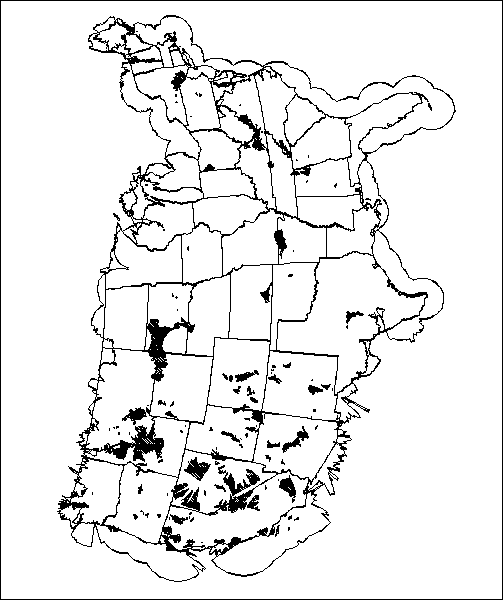
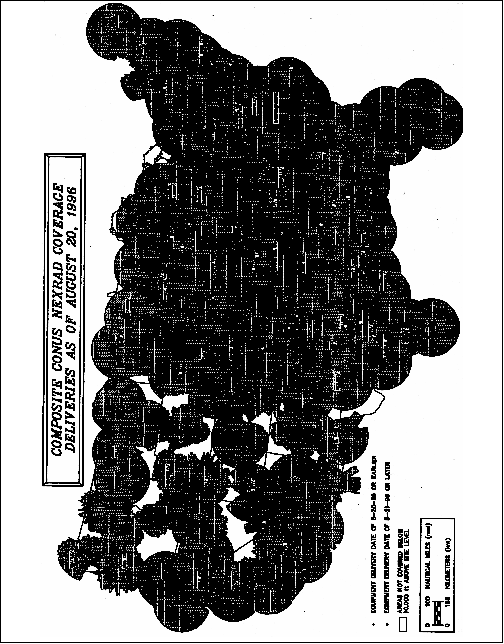
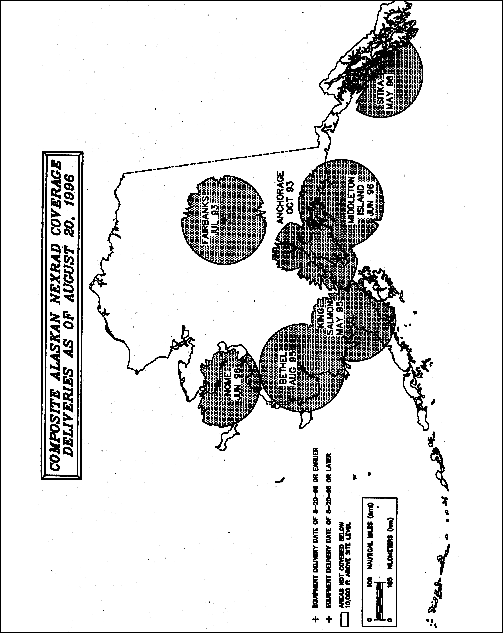
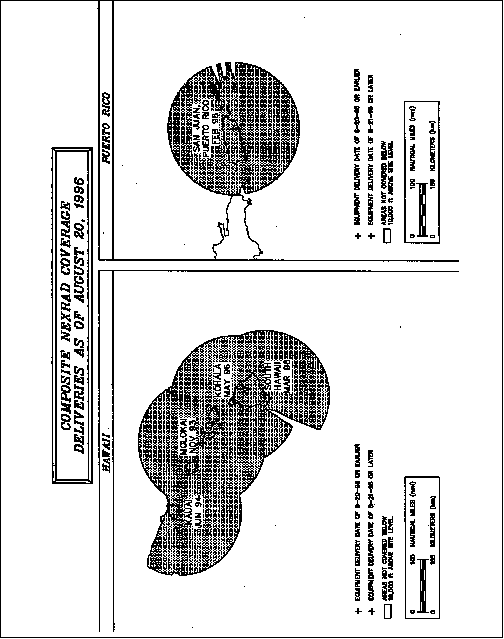
a. The National Weather Service operates a network of radar sites for detecting coverage, intensity, and movement of precipitation. The network is supplemented by FAA and DOD radar sites in the western sections of the country. Local warning radar sites augment the network by operating on an as needed basis to support warning and forecast programs.
b. Scheduled radar observations are taken hourly and transmitted in alpha-numeric format on weather telecommunications circuits for flight planning purposes. Under certain conditions, special radar reports are issued in addition to the hourly transmittals. Data contained in the reports are also collected by the National Center for Environmental Prediction and used to prepare national radar summary charts for dissemination on facsimile circuits.
c. A clear radar display (no echoes) does not mean that there is no significant weather within the coverage of the radar site. Clouds and fog are not detected by the radar. However, when echoes are present, turbulence can be implied by the intensity of the precipitation, and icing is implied by the presence of the precipitation at temperatures at or below zero degrees Celsius. Used in conjunction with other weather products, radar provides invaluable information for weather avoidance and flight planning.
FIG
7-1-10
NEXRAD Coverage
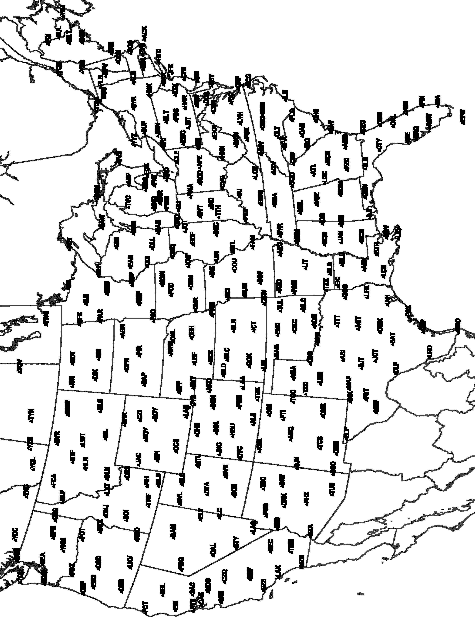
FIG
7-1-11
NEXRAD Coverage
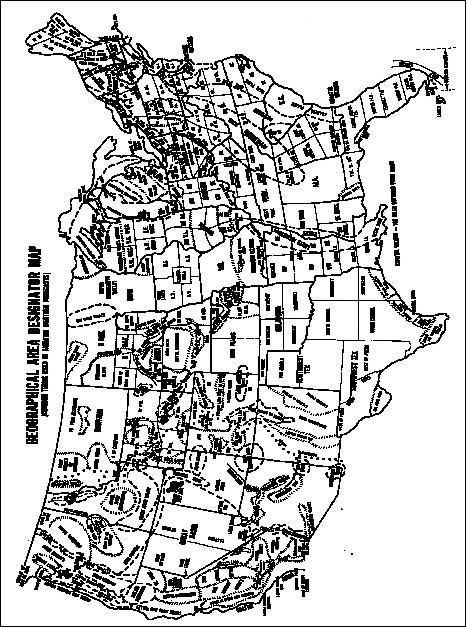
FIG
7-1-12
NEXRAD Coverage
d. All En Route Flight Advisory Service facilities and AFSSs have equipment to directly access the radar displays from the individual weather radar sites. Specialists at these locations are trained to interpret the display for pilot briefing and inflight advisory services. The Center Weather Service Units located in ARTCCs also have access to weather radar displays and provide support to all air traffic facilities within their center's area.
e. Additional information on weather radar products and services can be found in AC 00-45, Aviation Weather Services.
REFERENCE-
Pilot/Controller Glossary Term- Precipitation Radar Weather
Descriptions.
AIM, Thunderstorms, Paragraph 7-1-28.
A/FD, Charts, NWS Upper Air Observing Stations and Weather
Network for the location of specific radar
sites.
7-1-14. ATC Inflight Weather Avoidance Assistance
a. ATC Radar Weather Display.
1. ATC radars are able to display areas of precipitation by sending out a beam of radio energy that is reflected back to the radar antenna when it strikes an object or moisture which may be in the form of rain drops, hail, or snow. The larger the object is, or the more dense its reflective surface, the stronger the return will be presented. Radar weather processors indicate the intensity of reflective returns in terms of decibels (dBZ). ATC systems cannot detect the presence or absence of clouds. The ATC systems can often determine the intensity of a precipitation area, but the specific character of that area (snow, rain, hail, VIRGA, etc.) cannot be determined. For this reason, ATC refers to all weather areas displayed on ATC radar scopes as "precipitation."
2. All ATC facilities using radar weather processors with the ability to determine precipitation intensity, will describe the intensity to pilots as:
(a) "LIGHT" (< 30 dBZ)
(b) "MODERATE" (30 to 40 dBZ)
(c) "HEAVY" (> 40 to 50 dBZ)
(d) "EXTREME" (> 50 dBZ)
3. ATC facilities that, due to equipment limitations, cannot display the intensity levels of precipitation, will describe the location of the precipitation area by geographic position, or position relative to the aircraft. Since the intensity level is not available, the controller will state "INTENSITY UNKNOWN."
4. ARTCC facilities normally use a Weather and Radar Processor (WARP) to display a mosaic of data obtained from multiple NEXRAD sites. There is a time delay between actual conditions and those displayed to the controller. For example, the precipitation data on the ARTCC controller's display could be up to 6 minutes old. When the WARP is not available, a second system, the narrowband Air Route Surveillance Radar (ARSR) can display two distinct levels of precipitation intensity that will be described to pilots as "MODERATE" (30 to 40 dBZ) and "HEAVY TO EXTREME" ( > 40 dBZ ). The WARP processor is only used in ARTCC facilities.
5. ATC radar is not able to detect turbulence. Generally, turbulence can be expected to occur as the rate of rainfall or intensity of precipitation increases. Turbulence associated with greater rates of rainfall/precipitation will normally be more severe than any associated with lesser rates of rainfall/precipitation. Turbulence should be expected to occur near convective activity, even in clear air. Thunderstorms are a form of convective activity that imply severe or greater turbulence. Operation within 20 miles of thunderstorms should be approached with great caution, as the severity of turbulence can be markedly greater than the precipitation intensity might indicate.
b. Weather Avoidance Assistance.
1. To the extent possible, controllers will issue pertinent information on weather or chaff areas and assist pilots in avoiding such areas when requested. Pilots should respond to a weather advisory by either acknowledging the advisory or by acknowledging the advisory and requesting an alternative course of action as follows:
(a) Request to deviate off course by stating the number of miles and the direction of the requested deviation. In this case, when the requested deviation is approved, navigation is at the pilot's prerogative, but must maintain the altitude assigned by ATC and to remain within the specified mileage of the original course.
(b) Request a new route to avoid the affected area.
(c) Request a change of altitude.
(d) Request radar vectors around the affected areas.
2. For obvious reasons of safety, an IFR pilot must not deviate from the course or altitude or flight level without a proper ATC clearance. When weather conditions encountered are so severe that an immediate deviation is determined to be necessary and time will not permit approval by ATC, the pilot's emergency authority may be exercised.
3. When the pilot requests clearance for a route deviation or for an ATC radar vector, the controller must evaluate the air traffic picture in the affected area, and coordinate with other controllers (if ATC jurisdictional boundaries may be crossed) before replying to the request.
4. It should be remembered that the controller's primary function is to provide safe separation between aircraft. Any additional service, such as weather avoidance assistance, can only be provided to the extent that it does not derogate the primary function. It's also worth noting that the separation workload is generally greater than normal when weather disrupts the usual flow of traffic. ATC radar limitations and frequency congestion may also be a factor in limiting the controller's capability to provide additional service.
5. It is very important, therefore, that the request for deviation or radar vector be forwarded to ATC as far in advance as possible. Delay in submitting it may delay or even preclude ATC approval or require that additional restrictions be placed on the clearance. Insofar as possible the following information should be furnished to ATC when requesting clearance to detour around weather activity:
(a) Proposed point where detour will commence.
(b) Proposed route and extent of detour (direction and distance).
(c) Point where original route will be resumed.
(d) Flight conditions (IFR or VFR).
(e) Any further deviation that may become necessary as the flight progresses.
(f) Advise if the aircraft is equipped with functioning airborne radar.
6. To a large degree, the assistance that might be rendered by ATC will depend upon the weather information available to controllers. Due to the extremely transitory nature of severe weather situations, the controller's weather information may be of only limited value if based on weather observed on radar only. Frequent updates by pilots giving specific information as to the area affected, altitudes, intensity and nature of the severe weather can be of considerable value. Such reports are relayed by radio or phone to other pilots and controllers and also receive widespread teletypewriter dissemination.
7. Obtaining IFR clearance or an ATC radar vector to circumnavigate severe weather can often be accommodated more readily in the en route areas away from terminals because there is usually less congestion and, therefore, offer greater freedom of action. In terminal areas, the problem is more acute because of traffic density, ATC coordination requirements, complex departure and arrival routes, adjacent airports, etc. As a consequence, controllers are less likely to be able to accommodate all requests for weather detours in a terminal area or be in a position to volunteer such routing to the pilot. Nevertheless, pilots should not hesitate to advise controllers of any observed severe weather and should specifically advise controllers if they desire circumnavigation of observed weather.
c. Procedures for Weather Deviations and Other Contingencies in Oceanic Controlled Airspace.
1. When the pilot initiates communications with ATC, rapid response may be obtained by stating "WEATHER DEVIATION REQUIRED" to indicate priority is desired on the frequency and for ATC response.
2. The pilot still retains the option of initiating the communications using the urgency call "PAN-PAN" 3 times to alert all listening parties of a special handling condition which will receive ATC priority for issuance of a clearance or assistance.
3. ATC will:
(a) Approve the deviation.
(b) Provide vertical separation and then approve the deviation; or
(c) If ATC is unable to establish vertical separation, ATC shall advise the pilot that standard separation cannot be applied; provide essential traffic information for all affected aircraft, to the extent practicable; and if possible, suggest a course of action. ATC may suggest that the pilot climb or descend to a contingency altitude (1,000 feet above or below that assigned if operating above FL 290; 500 feet above or below that assigned if operating at or below FL 290).
PHRASEOLOGY-
STANDARD SEPARATION NOT AVAILABLE, DEVIATE AT PILOT'S
DISCRETION; SUGGEST CLIMB (or descent) TO (appropriate
altitude); TRAFFIC (position and altitude); REPORT DEVIATION
COMPLETE.
4. The pilot will follow the ATC advisory altitude when approximately 10 NM from track as well as execute the procedures detailed in paragraph 7-1-14c5.
5. If contact cannot be established or revised ATC clearance or advisory is not available and deviation from track is required, the pilot shall take the following actions:
(a) If possible, deviate away from an organized track or route system.
(b) Broadcast aircraft position and intentions on the frequency in use, as well as on frequency 121.5 MHz at suitable intervals stating: flight identification (operator call sign), flight level, track code or ATS route designator, and extent of deviation expected.
(c) Watch for conflicting traffic both visually and by reference to TCAS (if equipped).
(d) Turn on aircraft exterior lights.
(e) Deviations of less than 10 NM or operations within COMPOSITE (NOPAC and CEPAC) Airspace, should REMAIN at ASSIGNED altitude. Otherwise, when the aircraft is approximately 10 NM from track, initiate an altitude change based on the following criteria:
TBL
7-1-3
|
Route |
Deviations >10 NM |
Altitude Change |
|
East |
Left |
Descend 300
Feet |
|
West |
Left |
Climb 300 Feet Descend 300 Feet |
|
Pilot
Memory Slogan: "East right up, |
||
(f) When returning to track, be at assigned flight level when the aircraft is within approximately 10 NM of centerline.
(g) If contact was not established prior to deviating, continue to attempt to contact ATC to obtain a clearance. If contact was established, continue to keep ATC advised of intentions and obtain essential traffic information.
7-1-15. Runway Visual Range (RVR)
There are currently two configurations of RVR in the NAS commonly identified as Taskers and New Generation RVR. The Taskers are the existing configuration which uses transmissometer technology. The New Generation RVRs were deployed in November 1994 and use forward scatter technology. The New Generation RVRs are currently being deployed in the NAS to replace the existing Taskers.
a. RVR values are measured by transmissometers mounted on 14-foot towers along the runway. A full RVR system consists of:
1. Transmissometer projector and related items.
2. Transmissometer receiver (detector) and related items.
3. Analogue recorder.
4. Signal data converter and related items.
5. Remote digital or remote display programmer.
b. The transmissometer projector and receiver are mounted on towers 250 feet apart. A known intensity of light is emitted from the projector and is measured by the receiver. Any obscuring matter such as rain, snow, dust, fog, haze or smoke reduces the light intensity arriving at the receiver. The resultant intensity measurement is then converted to an RVR value by the signal data converter. These values are displayed by readout equipment in the associated air traffic facility and updated approximately once every minute for controller issuance to pilots.
c. The signal data converter receives information on the high intensity runway edge light setting in use (step 3, 4, or 5); transmission values from the transmissometer and the sensing of day or night conditions. From the three data sources, the system will compute appropriate RVR values.
d. An RVR transmissometer established on a 250 foot baseline provides digital readouts to a minimum of 600 feet, which are displayed in 200 foot increments to 3,000 feet and in 500 foot increments from 3,000 feet to a maximum value of 6,000 feet.
e. RVR values for Category IIIa operations extend down to 700 feet RVR; however, only 600 and 800 feet are reportable RVR increments. The 800 RVR reportable value covers a range of 701 feet to 900 feet and is therefore a valid minimum indication of Category IIIa operations.
f. Approach categories with the corresponding minimum RVR values. (See TBL 7-1-4.)
TBL
7-1-4
Approach
Category/Minimum RVR Table
|
Category |
Visibility (RVR) |
|
Nonprecision |
2,400 feet |
|
Category I |
1,800 feet |
|
Category II |
1,200 feet |
|
Category IIIa |
700 feet |
|
Category IIIb |
150 feet |
|
Category IIIc |
0 feet |
g. Ten minute maximum and minimum RVR values for the designated RVR runway are reported in the body of the aviation weather report when the prevailing visibility is less than one mile and/or the RVR is 6,000 feet or less. ATCTs report RVR when the prevailing visibility is 1 mile or less and/or the RVR is 6,000 feet or less.
h. Details on the requirements for the operational use of RVR are contained in FAA AC 97-1, "Runway Visual Range (RVR)." Pilots are responsible for compliance with minimums prescribed for their class of operations in the appropriate CFRs and/or operations specifications.
i. RVR values are also measured by forward scatter meters mounted on 14-foot frangible fiberglass poles. A full RVR system consists of:
1. Forward scatter meter with a transmitter, receiver and associated items.
2. A runway light intensity monitor (RLIM).
3. An ambient light sensor (ALS).
4. A data processor unit (DPU).
5. Controller display (CD).
j. The forward scatter meter is mounted on a 14-foot frangible pole. Infrared light is emitted from the transmitter and received by the receiver. Any obscuring matter such as rain, snow, dust, fog, haze or smoke increases the amount of scattered light reaching the receiver. The resulting measurement along with inputs from the runway light intensity monitor and the ambient light sensor are forwarded to the DPU which calculates the proper RVR value. The RVR values are displayed locally and remotely on controller displays.
k. The runway light intensity monitors both the runway edge and centerline light step settings (steps 1 through 5). Centerline light step settings are used for CAT IIIb operations. Edge Light step settings are used for CAT I, II, and IIIa operations.
l. New Generation RVRs can measure and display RVR values down to the lowest limits of Category IIIb operations (150 feet RVR). RVR values are displayed in 100 feet increments and are reported as follows:
1. 100-feet increments for products below 800 feet.
2. 200-feet increments for products between 800 feet and 3,000 feet.
3. 500-feet increments for products between 3,000 feet and 6,500 feet.
4. 25-meter increments for products below 150 meters.
5. 50-meter increments for products between 150 meters and 800 meters.
6. 100-meter increments for products between 800 meters and 1,200 meters.
7. 200-meter increments for products between 1,200 meters and 2,000 meters.
7-1-16. Reporting of Cloud Heights
a. Ceiling, by definition in the CFRs and as used in aviation weather reports and forecasts, is the height above ground (or water) level of the lowest layer of clouds or obscuring phenomenon that is reported as "broken," "overcast," or "obscuration," e.g., an aerodrome forecast (TAF) which reads "BKN030" refers to height above ground level. An area forecast which reads "BKN030" indicates that the height is above mean sea level.
REFERENCE-
AIM, Key to Aerodrome Forecast (TAF) and Aviation Routine
Weather Report (METAR), Paragraph
7-1-30,
defines "broken," "overcast," and
"obscuration."
b. Pilots usually report height values above MSL, since they determine heights by the altimeter. This is taken in account when disseminating and otherwise applying information received from pilots. ("Ceiling" heights are always above ground level.) In reports disseminated as PIREPs, height references are given the same as received from pilots, that is, above MSL.
c. In area forecasts or inflight advisories, ceilings are denoted by the contraction "CIG" when used with sky cover symbols as in "LWRG TO CIG OVC005," or the contraction "AGL" after, the forecast cloud height value. When the cloud base is given in height above MSL, it is so indicated by the contraction "MSL" or "ASL" following the height value. The heights of clouds tops, freezing level, icing, and turbulence are always given in heights above ASL or MSL.
7-1-17. Reporting Prevailing Visibility
a. Surface (horizontal) visibility is reported in METAR reports in terms of statute miles and increments thereof; e.g., 1/16, 1/8, 3/16, 1/4, 5/16, 3/8, 1/2, 5/8, 3/4, 7/8, 1, 1 1/8, etc. (Visibility reported by an unaugmented automated site is reported differently than in a manual report, i.e., ASOS: 0, 1/16, 1/8, 1/4, 1/2, 3/4, 1, 1 1/4, 1 1/2, 1 3/4, 2, 2 1/2, 3, 4, 5, etc., AWOS: M1/4, 1/4, 1/2, 3/4, 1, 1 1/4, 1 1/2, 1 3/4, 2, 2 1/2, 3, 4, 5, etc.) Visibility is determined through the ability to see and identify preselected and prominent objects at a known distance from the usual point of observation. Visibilities which are determined to be less than 7 miles, identify the obscuring atmospheric condition; e.g., fog, haze, smoke, etc., or combinations thereof.
b. Prevailing visibility is the greatest visibility equalled or exceeded throughout at least one half of the horizon circle, not necessarily contiguous. Segments of the horizon circle which may have a significantly different visibility may be reported in the remarks section of the weather report; i.e., the southeastern quadrant of the horizon circle may be determined to be 2 miles in mist while the remaining quadrants are determined to be 3 miles in mist.
c. When the prevailing visibility at the usual point of observation, or at the tower level, is less than 4 miles, certificated tower personnel will take visibility observations in addition to those taken at the usual point of observation. The lower of these two values will be used as the prevailing visibility for aircraft operations.
7-1-18. Estimating Intensity of Rain and Ice Pellets
a. Rain
1. Light. From scattered drops that, regardless of duration, do not completely wet an exposed surface up to a condition where individual drops are easily seen.
2. Moderate. Individual drops are not clearly identifiable; spray is observable just above pavements and other hard surfaces.
3. Heavy. Rain seemingly falls in sheets; individual drops are not identifiable; heavy spray to height of several inches is observed over hard surfaces.
b. Ice Pellets
1. Light. Scattered pellets that do not completely cover an exposed surface regardless of duration. Visibility is not affected.
2. Moderate. Slow accumulation on ground. Visibility reduced by ice pellets to less than 7 statute miles.
3. Heavy. Rapid accumulation on ground. Visibility reduced by ice pellets to less than 3 statute miles.
7-1-19. Estimating Intensity of Snow or Drizzle (Based on Visibility)
a. Light. Visibility more than 1/2 statute mile.
b. Moderate. Visibility from more than 1/4 statute mile to 1/2 statute mile.
c. Heavy. Visibility 1/4 statute mile or less.
7-1-20. Pilot Weather Reports (PIREPs)
a. FAA air traffic facilities are required to solicit PIREPs when the following conditions are reported or forecast: ceilings at or below 5,000 feet; visibility at or below 5 miles (surface or aloft); thunderstorms and related phenomena; icing of light degree or greater; turbulence of moderate degree or greater; wind shear and reported or forecast volcanic ash clouds.
b. Pilots are urged to cooperate and promptly volunteer reports of these conditions and other atmospheric data such as: cloud bases, tops and layers; flight visibility; precipitation; visibility restrictions such as haze, smoke and dust; wind at altitude; and temperature aloft.
c. PIREPs should be given to the ground facility with which communications are established; i.e., EFAS, AFSS/FSS, ARTCC, or terminal ATC. One of the primary duties of EFAS facilities, radio call "FLIGHT WATCH," is to serve as a collection point for the exchange of PIREPs with en route aircraft.
d. If pilots are not able to make PIREPs by radio, reporting upon landing of the inflight conditions encountered to the nearest AFSS/FSS or Weather Forecast Office will be helpful. Some of the uses made of the reports are:
1. The ATCT uses the reports to expedite the flow of air traffic in the vicinity of the field and for hazardous weather avoidance procedures.
2. The AFSS/FSS uses the reports to brief other pilots, to provide inflight advisories, and weather avoidance information to en route aircraft.
3. The ARTCC uses the reports to expedite the flow of en route traffic, to determine most favorable altitudes, and to issue hazardous weather information within the center's area.
4. The NWS uses the reports to verify or amend conditions contained in aviation forecast and advisories. In some cases, pilot reports of hazardous conditions are the triggering mechanism for the issuance of advisories. They also use the reports for pilot weather briefings.
5. The NWS, other government organizations, the military, and private industry groups use PIREPs for research activities in the study of meteorological phenomena.
6. All air traffic facilities and the NWS forward the reports received from pilots into the weather distribution system to assure the information is made available to all pilots and other interested parties.
e. The FAA, NWS, and other organizations that enter PIREPs into the weather reporting system use the format listed in TBL 7-1-5. Items 1 through 6 are included in all transmitted PIREPs along with one or more of items 7 through 13. Although the PIREP should be as complete and concise as possible, pilots should not be overly concerned with strict format or phraseology. The important thing is that the information is relayed so other pilots may benefit from your observation. If a portion of the report needs clarification, the ground station will request the information. Completed PIREPs will be transmitted to weather circuits as in the following examples:
TBL
7-1-5
PIREP Element Code
Chart
|
|
PIREP ELEMENT |
PIREP CODE |
CONTENTS |
|
1. |
3-letter station identifier |
XXX |
Nearest weather reporting location to the reported phenomenon |
|
2. |
Report type |
UA or UUA |
Routine or Urgent PIREP |
|
3. |
Location |
/OV |
In relation to a VOR |
|
4. |
Time |
/TM |
Coordinated Universal Time |
|
5. |
Altitude |
/FL |
Essential for turbulence and icing reports |
|
6. |
Type Aircraft |
/TP |
Essential for turbulence and icing reports |
|
7. |
Sky cover |
/SK |
Cloud height and coverage (sky clear, few, scattered, broken, or overcast) |
|
8. |
Weather |
/WX |
Flight visibility, precipitation, restrictions to visibility, etc. |
|
9. |
Temperature |
/TA |
Degrees Celsius |
|
10. |
Wind |
/WV |
Direction in degrees magnetic north and speed in knots |
|
11. |
Turbulence |
/TB |
See AIM paragraph 7-1-23 |
|
12. |
Icing |
/IC |
See AIM paragraph 7-1-21 |
|
13. |
Remarks |
/RM |
For reporting elements not included or to clarify previously reported items |
EXAMPLE-
1. KCMH UA /OV APE 230010/TM 1516/FL085/TP
BE20/SK BKN065/WX FV03SM HZ FU/TA 20/TB LGT
NOTE-
1. One zero miles southwest of Appleton VOR;
time 1516 UTC; altitude eight thousand five hundred;
aircraft type BE200; bases of the broken cloud layer is six
thousand five hundred; flight visibility 3 miles with haze
and smoke; air temperature 20 degrees Celsius; light
turbulence.
EXAMPLE-
2. KCRW UV /OV KBKW 360015-KCRW/TM
1815/FL120//TP BE99/SK IMC/WX RA/TA M08 /WV 290030/TB
LGT-MDT/IC LGT RIME/RM MDT MXD ICG DURC KROA NWBND FL080-100
1750Z
NOTE-
2. From 15 miles north of Beckley VOR to
Charleston VOR; time 1815 UTC; altitude 12,000 feet;
type aircraft, BE-99; in clouds; rain; temperature minus 8 Celsius;
wind 290 degrees magnetic at 30 knots; light to moderate
turbulence; light rime icing during climb northwestbound
from Roanoke, VA, between 8,000 and 10,000 feet at 1750 UTC.
7-1-21. PIREPs Relating to Airframe Icing
a. The effects of ice on aircraft are cumulative-thrust is reduced, drag increases, lift lessens, and weight increases. The results are an increase in stall speed and a deterioration of aircraft performance. In extreme cases, 2 to 3 inches of ice can form on the leading edge of the airfoil in less than 5 minutes. It takes but 1/2 inch of ice to reduce the lifting power of some aircraft by 50 percent and increases the frictional drag by an equal percentage.
b. A pilot can expect icing when flying in visible precipitation, such as rain or cloud droplets, and the temperature is between +02 and -10 degrees Celsius. When icing is detected, a pilot should do one of two things, particularly if the aircraft is not equipped with deicing equipment; get out of the area of precipitation; or go to an altitude where the temperature is above freezing. This "warmer" altitude may not always be a lower altitude. Proper preflight action includes obtaining information on the freezing level and the above freezing levels in precipitation areas. Report icing to ATC, and if operating IFR, request new routing or altitude if icing will be a hazard. Be sure to give the type of aircraft to ATC when reporting icing. The following describes how to report icing conditions.
1. Trace. Ice becomes perceptible. Rate of accumulation slightly greater than sublimation. Deicing/anti-icing equipment is not utilized unless encountered for an extended period of time (over 1 hour).
2. Light. The rate of accumulation may create a problem if flight is prolonged in this environment (over 1 hour). Occasional use of deicing/anti-icing equipment removes/prevents accumulation. It does not present a problem if the deicing/anti-icing equipment is used.
3. Moderate. The rate of accumulation is such that even short encounters become potentially hazardous and use of deicing/anti-icing equipment or flight diversion is necessary.
4. Severe. The rate of accumulation is such that deicing/anti-icing equipment fails to reduce or control the hazard. Immediate flight diversion is necessary.
EXAMPLE-
Pilot report: give aircraft identification, location, time (UTC),
intensity of type, altitude/FL, aircraft type, indicated
air speed (IAS), and outside air temperature (OAT).
NOTE-
1. Rime ice. Rough, milky, opaque ice formed
by the instantaneous freezing of small supercooled water
droplets.
2. Clear ice. A glossy, clear, or translucent ice formed by the relatively slow freezing of large supercooled water droplets.
3. The OAT should be requested by the AFSS/FSS or ATC if not included in the PIREP.
7-1-22. Definitions of Inflight Icing Terms
See TBL 7-1-6, Icing Types, and TBL 7-1-7, Icing Conditions.
|
Clear Ice |
See Glaze Ice. |
|
Glaze Ice |
Ice, sometimes clear and smooth, but usually containing some air pockets, which results in a lumpy translucent appearance. Glaze ice results from supercooled drops/droplets striking a surface but not freezing rapidly on contact. Glaze ice is denser, harder, and sometimes more transparent than rime ice. Factors, which favor glaze formation, are those that favor slow dissipation of the heat of fusion (i.e., slight supercooling and rapid accretion). With larger accretions, the ice shape typically includes "horns" protruding from unprotected leading edge surfaces. It is the ice shape, rather than the clarity or color of the ice, which is most likely to be accurately assessed from the cockpit. The terms "clear" and "glaze" have been used for essentially the same type of ice accretion, although some reserve "clear" for thinner accretions which lack horns and conform to the airfoil. |
|
Intercycle Ice |
Ice which accumulates on a protected surface between actuation cycles of a deicing system. |
|
Known or Observed or Detected Ice Accretion |
Actual ice observed visually to be on the aircraft by the flight crew or identified by on-board sensors. |
|
Mixed Ice |
Simultaneous appearance or a combination of rime and glaze ice characteristics. Since the clarity, color, and shape of the ice will be a mixture of rime and glaze characteristics, accurate identification of mixed ice from the cockpit may be difficult. |
|
Residual Ice |
Ice which remains on a protected surface immediately after the actuation of a deicing system. |
|
Rime Ice |
A rough, milky, opaque ice formed by the rapid freezing of supercooled drops/droplets after they strike the aircraft. The rapid freezing results in air being trapped, giving the ice its opaque appearance and making it porous and brittle. Rime ice typically accretes along the stagnation line of an airfoil and is more regular in shape and conformal to the airfoil than glaze ice. It is the ice shape, rather than the clarity or color of the ice, which is most likely to be accurately assessed from the cockpit. |
|
Runback Ice |
Ice which forms from the freezing or refreezing of water leaving protected surfaces and running back to unprotected surfaces. |
|
Note- |
|
|
Appendix C Icing Conditions |
Appendix C (14 CFR, Part 25 and 29) is the certification icing condition standard for approving ice protection provisions on aircraft. The conditions are specified in terms of altitude, temperature, liquid water content (LWC), representative droplet size (mean effective drop diameter [MED]), and cloud horizontal extent. |
|
Forecast Icing Conditions |
Environmental conditions expected by a National Weather Service or an FAA-approved weather provider to be conducive to the formation of inflight icing on aircraft. |
|
Freezing Drizzle (FZDZ) |
Drizzle is precipitation at ground level or aloft in the form of liquid water drops which have diameters less than 0.5 mm and greater than 0.05 mm. Freezing drizzle is drizzle that exists at air temperatures less than 0°C (supercooled), remains in liquid form, and freezes upon contact with objects on the surface or airborne. |
|
Freezing Precipitation |
Freezing precipitation is freezing rain or freezing drizzle falling through or outside of visible cloud. |
|
Freezing Rain (FZRA) |
Rain is precipitation at ground level or aloft in the form of liquid water drops which have diameters greater than 0.5 mm. Freezing rain is rain that exists at air temperatures less than 0°C (supercooled), remains in liquid form, and freezes upon contact with objects on the ground or in the air. |
|
Icing in Cloud |
Icing occurring within visible cloud. Cloud droplets (diameter < 0.05 mm) will be present; freezing drizzle and/or freezing rain may or may not be present. |
|
Icing in Precipitation |
Icing occurring from an encounter with freezing precipitation, that is, supercooled drops with diameters exceeding 0.05 mm, within or outside of visible cloud. |
|
Known Icing Conditions |
Atmospheric
conditions in which the formation of ice is
observed or detected in flight. |
|
Potential Icing Conditions |
Atmospheric icing conditions that are typically defined by airframe manufacturers relative to temperature and visible moisture that may result in aircraft ice accretion on the ground or in flight. The potential icing conditions are typically defined in the Airplane Flight Manual or in the Airplane Operation Manual. |
|
Supercooled Drizzle Drops (SCDD) |
Synonymous with freezing drizzle aloft. |
|
Supercooled Drops or /Droplets |
Water drops/droplets which remain unfrozen at temperatures below 0°C. Supercooled drops are found in clouds, freezing drizzle, and freezing rain in the atmosphere. These drops may impinge and freeze after contact on aircraft surfaces. |
|
Supercooled Large Drops (SLD) |
Liquid droplets with diameters greater than 0.05 mm at temperatures less than 0°C, i.e., freezing rain or freezing drizzle. |
7-1-23. PIREPs Relating to Turbulence
a. When encountering turbulence, pilots are urgently requested to report such conditions to ATC as soon as practicable. PIREPs relating to turbulence should state:
1. Aircraft location.
2. Time of occurrence in UTC.
3. Turbulence intensity.
4. Whether the turbulence occurred in or near clouds.
5. Aircraft altitude or flight level.
6. Type of aircraft.
7. Duration of turbulence.
EXAMPLE-
1. Over Omaha, 1232Z, moderate turbulence in
clouds at Flight Level three one zero, Boeing 707.
2. From five zero miles south of Albuquerque to three zero miles north of Phoenix, 1250Z, occasional moderate chop at Flight Level three three zero, DC8.
b. Duration and classification of intensity should be made using TBL 7-1-8.
TBL
7-1-8
Turbulence Reporting
Criteria Table
|
Intensity |
Aircraft Reaction |
Reaction Inside Aircraft |
Reporting Term-Definition |
|
Light |
Turbulence that momentarily causes slight, erratic changes in altitude and/or attitude (pitch, roll, yaw). Report as Light Turbulence; 1 or Turbulence that causes slight, rapid and somewhat rhythmic bumpiness without appreciable changes in altitude or attitude. Report as Light Chop. |
Occupants may feel a slight strain against seat belts or shoulder straps. Unsecured objects may be displaced slightly. Food service may be conducted and little or no difficulty is encountered in walking. |
Occasional-Less than 1/3 of the time.
Intermittent-1/3 to 2/3.
Continuous-More than 2/3. |
|
Moderate |
Turbulence
that is similar to Light Turbulence but of greater
intensity. Changes in altitude and/or attitude
occur but the aircraft remains in positive control
at all times. It usually causes variations in
indicated airspeed. Report as Moderate
Turbulence; 1 |
Occupants feel definite strains against seat belts or shoulder straps. Unsecured objects are dislodged. Food service and walking are difficult. |
1. Pilots should report location(s), time (UTC), intensity, whether in or near clouds, altitude, type of aircraft and, when applicable, duration of turbulence.
2. Duration may be based on time between two locations or over a single location. All locations should be readily identifiable. |
|
Severe |
Turbulence that causes large, abrupt changes in altitude and/or attitude. It usually causes large variations in indicated airspeed. Aircraft may be momentarily out of control. Report as Severe Turbulence. 1 |
Occupants are forced violently against seat belts or shoulder straps. Unsecured objects are tossed about. Food Service and walking are impossible. |
a. Over Omaha. 1232Z, Moderate Turbulence, in cloud, Flight Level 310, B707. |
|
Extreme |
Turbulence in which the aircraft is violently tossed about and is practically impossible to control. It may cause structural damage. Report as Extreme Turbulence. 1 |
|
b. From 50 miles south of Albuquerque to 30 miles north of Phoenix, 1210Z to 1250Z, occasional Moderate Chop, Flight Level 330, DC8. |
|
1 High level turbulence (normally above 15,000 feet ASL) not associated with cumuliform cloudiness, including thunderstorms, should be reported as CAT (clear air turbulence) preceded by the appropriate intensity, or light or moderate chop. |
|||
a. Because unexpected changes in wind speed and direction can be hazardous to aircraft operations at low altitudes on approach to and departing from airports, pilots are urged to promptly volunteer reports to controllers of wind shear conditions they encounter. An advance warning of this information will assist other pilots in avoiding or coping with a wind shear on approach or departure.
b. When describing conditions, use of the terms "negative" or "positive" wind shear should be avoided. PIREPs of "negative wind shear on final," intended to describe loss of airspeed and lift, have been interpreted to mean that no wind shear was encountered. The recommended method for wind shear reporting is to state the loss or gain of airspeed and the altitudes at which it was encountered.
EXAMPLE-
1. Denver Tower, Cessna 1234 encountered wind
shear, loss of 20 knots at 400.
2. Tulsa Tower, American 721 encountered wind shear on final, gained 25 knots between 600 and 400 feet followed by loss of 40 knots between 400 feet and surface.
1. Pilots who are not able to report wind shear in these specific terms are encouraged to make reports in terms of the effect upon their aircraft.
EXAMPLE-
Miami Tower, Gulfstream 403 Charlie encountered an abrupt
wind shear at 800 feet on final, max thrust required.
2. Pilots using Inertial Navigation Systems (INSs) should report the wind and altitude both above and below the shear level.
7-1-25. Clear Air Turbulence (CAT) PIREPs
CAT has become a very serious operational factor to flight operations at all levels and especially to jet traffic flying in excess of 15,000 feet. The best available information on this phenomenon must come from pilots via the PIREP reporting procedures. All pilots encountering CAT conditions are urgently requested to report time, location, and intensity (light, moderate, severe, or extreme) of the element to the FAA facility with which they are maintaining radio contact. If time and conditions permit, elements should be reported according to the standards for other PIREPs and position reports.
REFERENCE-
AIM, PIREPs Relating to Turbulence, Paragraph
7-1-23.
a. Relatively recent meteorological studies have confirmed the existence of microburst phenomenon. Microbursts are small scale intense downdrafts which, on reaching the surface, spread outward in all directions from the downdraft center. This causes the presence of both vertical and horizontal wind shears that can be extremely hazardous to all types and categories of aircraft, especially at low altitudes. Due to their small size, short life span, and the fact that they can occur over areas without surface precipitation, microbursts are not easily detectable using conventional weather radar or wind shear alert systems.
b. Parent clouds producing microburst activity can be any of the low or middle layer convective cloud types. Note, however, that microbursts commonly occur within the heavy rain portion of thunderstorms, and in much weaker, benign appearing convective cells that have little or no precipitation reaching the ground.
FIG
7-1-13
Evolution of a Microburst
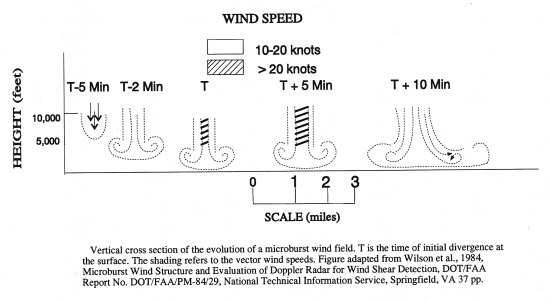
c.
The life cycle of a microburst as it descends in a
convective rain shaft is seen in
FIG
7-1-13. An important
consideration for pilots is the fact that the microburst
intensifies for about 5 minutes after it strikes the ground.
d. Characteristics of microbursts include:
1. Size. The microburst downdraft is typically less than 1 mile in diameter as it descends from the cloud base to about 1,000-3,000 feet above the ground. In the transition zone near the ground, the downdraft changes to a horizontal outflow that can extend to approximately 2 1/2 miles in diameter.
2. Intensity. The downdrafts can be as strong as 6,000 feet per minute. Horizontal winds near the surface can be as strong as 45 knots resulting in a 90 knot shear (headwind to tailwind change for a traversing aircraft) across the microburst. These strong horizontal winds occur within a few hundred feet of the ground.
3. Visual Signs. Microbursts can be found almost anywhere that there is convective activity. They may be embedded in heavy rain associated with a thunderstorm or in light rain in benign appearing virga. When there is little or no precipitation at the surface accompanying the microburst, a ring of blowing dust may be the only visual clue of its existence.
4. Duration. An individual microburst will seldom last longer than 15 minutes from the time it strikes the ground until dissipation. The horizontal winds continue to increase during the first 5 minutes with the maximum intensity winds lasting approximately 2-4 minutes. Sometimes microbursts are concentrated into a line structure, and under these conditions, activity may continue for as long as an hour. Once microburst activity starts, multiple microbursts in the same general area are not uncommon and should be expected.
FIG
7-1-14
Microburst Encounter During Takeoff
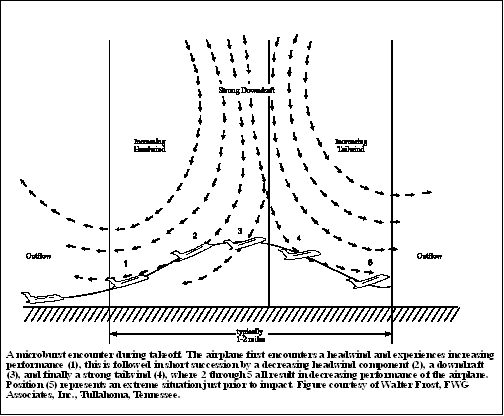
e. Microburst wind shear may create a severe hazard for aircraft within 1,000 feet of the ground, particularly during the approach to landing and landing and take-off phases. The impact of a microburst on aircraft which have the unfortunate experience of penetrating one is characterized in FIG 7-1-14. The aircraft may encounter a headwind (performance increasing) followed by a downdraft and tailwind (both performance decreasing), possibly resulting in terrain impact.
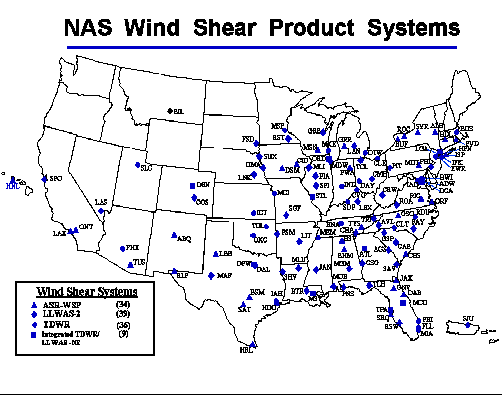
FIG
7-1-15
NAS Wind Shear Product Systems
f. Detection of Microbursts, Wind Shear and Gust Fronts.
1. FAA's Integrated Wind Shear Detection Plan.
(a) The FAA currently employs an integrated plan for wind shear detection that will significantly improve both the safety and capacity of the majority of the airports currently served by the air carriers. This plan integrates several programs, such as the Integrated Terminal Weather System (ITWS), Terminal Doppler Weather Radar (TDWR), Weather System Processor (WSP), and Low Level Wind Shear Alert Systems (LLWAS) into a single strategic concept that significantly improves the aviation weather information in the terminal area. (See FIG 7-1-15.)
(b) The wind shear/microburst information and warnings are displayed on the ribbon display terminals (RBDT) located in the tower cabs. They are identical (and standardized) in the LLWAS, TDWR and WSP systems, and so designed that the controller does not need to interpret the data, but simply read the displayed information to the pilot. The RBDTs are constantly monitored by the controller to ensure the rapid and timely dissemination of any hazardous event(s) to the pilot.
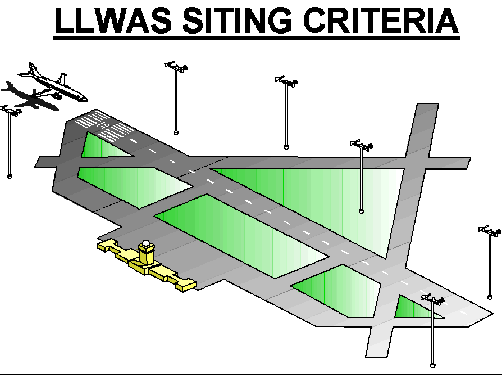
FIG
7-1-16
LLWAS Siting Criteria
(c) The early detection of a wind shear/micro-burst event, and the subsequent warning(s) issued to an aircraft on approach or departure, will alert the pilot/crew to the potential of, and to be prepared for, a situation that could become very dangerous! Without these warnings, the aircraft may NOT be able to climb out of, or safely transition, the event, resulting in a catastrophe. The air carriers, working with the FAA, have developed specialized training programs using their simulators to train and prepare their pilots on the demanding aircraft procedures required to escape these very dangerous wind shear and/or microburst encounters.
2. Low Level Wind Shear Alert System (LLWAS).
(a) The LLWAS provides wind data and software processes to detect the presence of hazardous wind shear and microbursts in the vicinity of an airport. Wind sensors, mounted on poles sometimes as high as 150 feet, are (ideally) located 2,000 - 3,500 feet, but not more than 5,000 feet, from the centerline of the runway. (See FIG 7-1-16.)
FIG
7-1-17
Warning Boxes
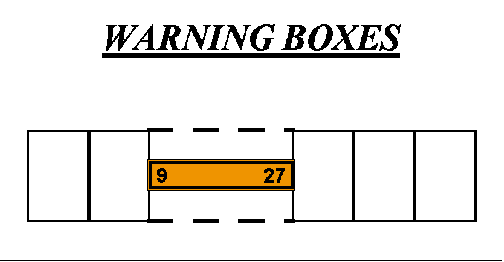
(b) LLWAS was fielded in 1988 at 110 airports across the nation. Many of these systems have been replaced by new TDWR and WSP technology. Eventually all LLWAS systems will be phased out; however, 39 airports will be upgraded to the LLWAS-NE (Network Expansion) system, which employs the very latest software and sensor technology. The new LLWAS-NE systems will not only provide the controller with wind shear warnings and alerts, including wind shear/microburst detection at the airport wind sensor location, but will also provide the location of the hazards relative to the airport runway(s). It will also have the flexibility and capability to grow with the airport as new runways are built. As many as 32 sensors, strategically located around the airport and in relationship to its runway configuration, can be accommodated by the LLWAS-NE network.
3. Terminal Doppler Weather Radar (TDWR).
(a)
TDWRs are being deployed at 45 locations across
the U.S. Optimum locations for TDWRs are 8 to 12 miles off
of the airport proper, and designed to look at the airspace
around and over the airport to detect microbursts, gust
fronts, wind shifts and precipitation intensities. TDWR
products advise the controller of wind shear and microburst
events impacting all runways and the areas
1/2 mile on either side of the
extended centerline of the runways out to 3 miles on final
approach and 2 miles out on departure.
(FIG
7-1-17 is a theoretical view
of the warning boxes, including the runway, that the
software uses in determining the location(s) of wind shear
or microbursts). These warnings are displayed (as depicted
in the examples in subparagraph 5) on the RBDT.
(b) It is very important to understand what TDWR does NOT DO:
(1) It DOES NOT warn of wind shear outside of the alert boxes (on the arrival and departure ends of the runways);
(2) It DOES NOT detect wind shear that is NOT a microburst or a gust front;
(3) It DOES NOT detect gusty or cross wind conditions; and
(4) It DOES NOT detect turbulence.
However, research and development is continuing on these systems. Future improvements may include such areas as storm motion (movement), improved gust front detection, storm growth and decay, microburst prediction, and turbulence detection.
(c) TDWR also provides a geographical situation display (GSD) for supervisors and traffic management specialists for planning purposes. The GSD displays (in color) 6 levels of weather (precipitation), gust fronts and predicted storm movement(s). This data is used by the tower supervisor(s), traffic management specialists and controllers to plan for runway changes and arrival/departure route changes in order to both reduce aircraft delays and increase airport capacity.
4. Weather System Processor (WSP).
(a) The WSP provides the controller, supervisor, traffic management specialist, and ultimately the pilot, with the same products as the terminal doppler weather radar (TDWR) at a fraction of the cost of a TDWR. This is accomplished by utilizing new technologies to access the weather channel capabilities of the existing ASR-9 radar located on or near the airport, thus eliminating the requirements for a separate radar location, land acquisition, support facilities and the associated communication landlines and expenses.
(b) The WSP utilizes the same RBDT display as the TDWR and LLWAS, and, just like TDWR, also has a GSD for planning purposes by supervisors, traffic management specialists and controllers. The WSP GSD emulates the TDWR display, i.e., it also depicts 6 levels of precipitation, gust fronts and predicted storm movement, and like the TDWR GSD, is used to plan for runway changes and arrival/departure route changes in order to reduce aircraft delays and to increase airport capacity.
(c) This system is currently under development and is operating in a developmental test status at the Albuquerque, New Mexico, airport. When fielded, the WSP is expected to be installed at 34 airports across the nation, substantially increasing the safety of the American flying public.
5. Operational aspects of LLWAS, TDWR and WSP.
To demonstrate how this data is used by both the controller and the pilot, 3 ribbon display examples and their explanations are presented:
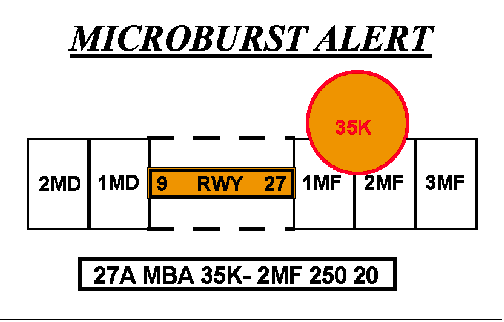
(a) MICROBURST ALERTS
EXAMPLE-
This is what the controller sees on his/her ribbon display
in the tower cab.
|
27A MBA 35K- 2MF 250 20 |
NOTE-
(See FIG
7-1-18 to see how the
TDWR/WSP determines the microburst location).
This is what the controller will say when issuing the alert.
PHRASEOLOGY-
RUNWAY 27 ARRIVAL, MICROBURST ALERT, 35 KT LOSS 2 MILE
FINAL, THRESHOLD WIND 250 AT 20.
In plain language, the controller is telling the pilot that on approach to runway 27, there is a microburst alert on the approach lane to the runway, and to anticipate or expect a 35 knot loss of airspeed at approximately 2 miles out on final approach (where it will first encounter the phenomena). With that information, the aircrew is forewarned, and should be prepared to apply wind shear/microburst escape procedures should they decide to continue the approach. Additionally, the surface winds at the airport for landing runway 27 are reported as 250 degrees at 20 knots.
NOTE-
Threshold wind is at pilot's request or as deemed
appropriate by the controller.
REFERENCE-
FAA Order JO 7110.65, Air Traffic Control, Low Level Wind
Shear/Microburst Advisories, Paragraph
3-1-8b2(a).
FIG
7-1-18
Microburst Alert
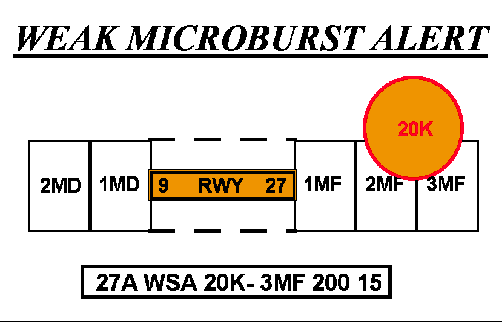
(b) WIND SHEAR ALERTS
EXAMPLE-
This is what the controller sees on his/her ribbon display
in the tower cab.
|
27A WSA 20K- 3MF 200 15 |
NOTE-
(See FIG
7-1-19 to see how the
TDWR/WSP determines the wind shear location).
This is what the controller will say when issuing the alert.
PHRASEOLOGY-
RUNWAY 27 ARRIVAL, WIND SHEAR ALERT, 20 KT LOSS 3 MILE
FINAL, THRESHOLD WIND 200 AT 15.
In plain language, the controller is advising the aircraft arriving on runway 27 that at about 3 miles out they can expect to encounter a wind shear condition that will decrease their airspeed by 20 knots and possibly encounter turbulence. Additionally, the airport surface winds for landing runway 27 are reported as 200 degrees at 15 knots.
NOTE-
Threshold wind is at pilot's request or as deemed
appropriate by the controller.
REFERENCE-
FAA Order JO 7110.65, Air Traffic Control, Low Level Wind
Shear/Microburst Advisories, Paragraph
3-1-8b2(a).
FIG
7-1-19
Weak Microburst Alert
FIG
7-1-20
Gust Front Alert
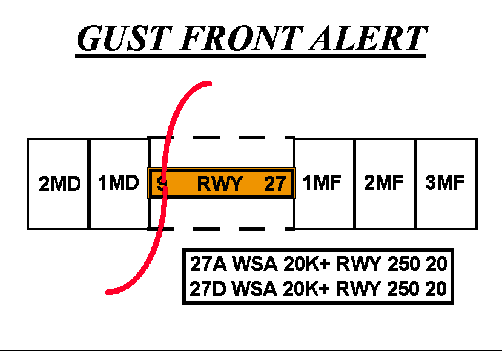
(c) MULTIPLE WIND SHEAR ALERTS
EXAMPLE-
This is what the controller sees on his/her ribbon display
in the tower cab.
|
27A WSA 20K+ RWY 250 20 |
|
27D WSA 20K+ RWY 250 20 |
NOTE-
(See FIG
7-1-20 to see how the
TDWR/WSP determines the gust front/wind shear location.)
This is what the controller will say when issuing the alert.
PHRASEOLOGY-
MULTIPLE WIND SHEAR ALERTS. RUNWAY 27 ARRIVAL, WIND SHEAR
ALERT, 20 KT GAIN ON RUNWAY; RUNWAY 27 DEPARTURE, WIND SHEAR
ALERT, 20 KT GAIN ON RUNWAY, WIND 250 AT 20.
EXAMPLE-
In this example, the controller is advising arriving and
departing aircraft that they could encounter a wind shear
condition right on the runway due to a gust front
(significant change of wind direction) with the possibility
of a 20 knot gain in airspeed associated with the gust
front. Additionally, the airport surface winds (for the
runway in use) are reported as 250 degrees at 20 knots.
REFERENCE-
FAA Order JO 7110.65, Air Traffic Control, Low Level Wind
Shear/Microburst Advisories, Paragraph
3-1-8b2(d).
6. The Terminal Weather Information for Pilots System (TWIP).
(a) With the increase in the quantity and quality of terminal weather information available through TDWR, the next step is to provide this information directly to pilots rather than relying on voice communications from ATC. The National Airspace System has long been in need of a means of delivering terminal weather information to the cockpit more efficiently in terms of both speed and accuracy to enhance pilot awareness of weather hazards and reduce air traffic controller workload. With the TWIP capability, terminal weather information, both alphanumerically and graphically, is now available directly to the cockpit on a test basis at 9 locations.
(b) TWIP products are generated using weather data from the TDWR or the Integrated Terminal Weather System (ITWS) testbed. TWIP products are generated and stored in the form of text and character graphic messages. Software has been developed to allow TDWR or ITWS to format the data and send the TWIP products to a database resident at Aeronautical Radio, Inc. (ARINC). These products can then be accessed by pilots using the ARINC Aircraft Communications Addressing and Reporting System (ACARS) data link services. Airline dispatchers can also access this database and send messages to specific aircraft whenever wind shear activity begins or ends at an airport.
(c) TWIP products include descriptions and character graphics of microburst alerts, wind shear alerts, significant precipitation, convective activity within 30 NM surrounding the terminal area, and expected weather that will impact airport operations. During inclement weather, i.e., whenever a predetermined level of precipitation or wind shear is detected within 15 miles of the terminal area, TWIP products are updated once each minute for text messages and once every five minutes for character graphic messages. During good weather (below the predetermined precipitation or wind shear parameters) each message is updated every 10 minutes. These products are intended to improve the situational awareness of the pilot/flight crew, and to aid in flight planning prior to arriving or departing the terminal area. It is important to understand that, in the context of TWIP, the predetermined levels for inclement versus good weather has nothing to do with the criteria for VFR/MVFR/IFR/LIFR; it only deals with precipitation, wind shears and microbursts.
7-1-27. PIREPs Relating to Volcanic Ash Activity
a. Volcanic eruptions which send ash into the upper atmosphere occur somewhere around the world several times each year. Flying into a volcanic ash cloud can be extremely dangerous. At least two B747s have lost all power in all four engines after such an encounter. Regardless of the type aircraft, some damage is almost certain to ensue after an encounter with a volcanic ash cloud.
b. While some volcanoes in the U.S. are monitored, many in remote areas are not. These unmonitored volcanoes may erupt without prior warning to the aviation community. A pilot observing a volcanic eruption who has not had previous notification of it may be the only witness to the eruption. Pilots are strongly encouraged to transmit a PIREP regarding volcanic eruptions and any observed volcanic ash clouds.
c. Pilots should submit PIREPs regarding volcanic activity using the Volcanic Activity Reporting (VAR) form as illustrated in Appendix 2. If a VAR form is not immediately available, relay enough information to identify the position and type of volcanic activity.
d. Pilots should verbally transmit the data required in items 1 through 8 of the VAR as soon as possible. The data required in items 9 through 16 of the VAR should be relayed after landing if possible.
a. Turbulence, hail, rain, snow, lightning, sustained updrafts and downdrafts, icing conditions-all are present in thunderstorms. While there is some evidence that maximum turbulence exists at the middle level of a thunderstorm, recent studies show little variation of turbulence intensity with altitude.
b. There is no useful correlation between the external visual appearance of thunderstorms and the severity or amount of turbulence or hail within them. The visible thunderstorm cloud is only a portion of a turbulent system whose updrafts and downdrafts often extend far beyond the visible storm cloud. Severe turbulence can be expected up to 20 miles from severe thunderstorms. This distance decreases to about 10 miles in less severe storms.
c. Weather radar, airborne or ground based, will normally reflect the areas of moderate to heavy precipitation (radar does not detect turbulence). The frequency and severity of turbulence generally increases with the radar reflectivity which is closely associated with the areas of highest liquid water content of the storm. NO FLIGHT PATH THROUGH AN AREA OF STRONG OR VERY STRONG RADAR ECHOES SEPARATED BY 20-30 MILES OR LESS MAY BE CONSIDERED FREE OF SEVERE TURBULENCE.
d. Turbulence beneath a thunderstorm should not be minimized. This is especially true when the relative humidity is low in any layer between the surface and 15,000 feet. Then the lower altitudes may be characterized by strong out flowing winds and severe turbulence.
e. The probability of lightning strikes occurring to aircraft is greatest when operating at altitudes where temperatures are between minus 5 degrees Celsius and plus 5 degrees Celsius. Lightning can strike aircraft flying in the clear in the vicinity of a thunderstorm.
f. METAR reports do not include a descriptor for severe thunderstorms. However, by understanding severe thunderstorm criteria, i.e., 50 knot winds or 3/4 inch hail, the information is available in the report to know that one is occurring.
g. Current weather radar systems are able to objectively determine precipitation intensity. These precipitation intensity areas are described as "light," "moderate," "heavy," and "extreme."
REFERENCE-
Pilot/Controller Glossary, Precipitation Radar Weather
Descriptions.
EXAMPLE-
1. Alert provided by an ATC facility to an
aircraft:
(aircraft identification) EXTREME precipitation
between ten o'clock and two o'clock, one five miles.
Precipitation area is two five miles in diameter.
2.
Alert provided by an AFSS/FSS:
(aircraft identification) EXTREME precipitation two zero
miles west of Atlanta V-O-R, two five miles wide, moving
east at two zero knots, tops flight level three niner
zero.
a. Above all, remember this: never regard any thunderstorm "lightly" even when radar observers report the echoes are of light intensity. Avoiding thunderstorms is the best policy. Following are some Do's and Don'ts of thunderstorm avoidance:
1. Don't land or takeoff in the face of an approaching thunderstorm. A sudden gust front of low level turbulence could cause loss of control.
2. Don't attempt to fly under a thunderstorm even if you can see through to the other side. Turbulence and wind shear under the storm could be disastrous.
3. Don't fly without airborne radar into a cloud mass containing scattered embedded thunderstorms. Scattered thunderstorms not embedded usually can be visually circumnavigated.
4. Don't trust the visual appearance to be a reliable indicator of the turbulence inside a thunderstorm.
5. Do avoid by at least 20 miles any thunderstorm identified as severe or giving an intense radar echo. This is especially true under the anvil of a large cumulonimbus.
6. Do clear the top of a known or suspected severe thunderstorm by at least 1,000 feet altitude for each 10 knots of wind speed at the cloud top. This should exceed the altitude capability of most aircraft.
7. Do circumnavigate the entire area if the area has 6/10 thunderstorm coverage.
8. Do remember that vivid and frequent lightning indicates the probability of a strong thunderstorm.
9. Do regard as extremely hazardous any thunderstorm with tops 35,000 feet or higher whether the top is visually sighted or determined by radar.
b. If you cannot avoid penetrating a thunderstorm, following are some Do's before entering the storm:
1. Tighten your safety belt, put on your shoulder harness if you have one and secure all loose objects.
2. Plan and hold your course to take you through the storm in a minimum time.
3. To avoid the most critical icing, establish a penetration altitude below the freezing level or above the level of minus 15 degrees Celsius.
4. Verify that pitot heat is on and turn on carburetor heat or jet engine anti-ice. Icing can be rapid at any altitude and cause almost instantaneous power failure and/or loss of airspeed indication.
5. Establish power settings for turbulence penetration airspeed recommended in your aircraft manual.
6. Turn up cockpit lights to highest intensity to lessen temporary blindness from lightning.
7. If using automatic pilot, disengage altitude hold mode and speed hold mode. The automatic altitude and speed controls will increase maneuvers of the aircraft thus increasing structural stress.
8. If using airborne radar, tilt the antenna up and down occasionally. This will permit you to detect other thunderstorm activity at altitudes other than the one being flown.
c. Following are some Do's and Don'ts during the thunderstorm penetration:
1. Do keep your eyes on your instruments. Looking outside the cockpit can increase danger of temporary blindness from lightning.
2. Don't change power settings; maintain settings for the recommended turbulence penetration airspeed.
3. Don't attempt to maintain constant altitude; let the aircraft "ride the waves."
4. Don't turn back once you are in the thunderstorm. A straight course through the storm most likely will get you out of the hazards most quickly. In addition, turning maneuvers increase stress on the aircraft.
7-1-30. Key to Aerodrome Forecast (TAF) and Aviation Routine Weather Report (METAR)
FIG
7-1-21
Key to Aerodrome Forecast (TAF) and Aviation Routine Weather
Report (METAR) (Front)

|
|
|
|
|
|
KEY
to AERODROME FORECAST (TAF) and |
|
|
|
|
|
|
|
TAF KPIT 091730Z 091818 15005KT 5SM HZ FEW020 WS010/31022KT |
|
|
|
FM 1930 30015G25KT 3SM SHRA OVC015 TEMPO 2022 1/2SM +TSRA |
|
|
|
OVC008CB |
|
|
|
FM0100 27008KT 5SM SHRA BKN020 OVC040 PROB40 0407 1SM -RA BR |
|
|
|
FM1015
18005KT 6SM -SHRA OVC020 BECMG 1315 P6SM NSW
SKC |
|
|
|
METAR KPIT 091955Z COR 22015G25KT 3/4SM R28L/2600FT TSRA OVC010CB |
|
|
|
18/16 A2992 RMK SLP045 T01820159 |
|
|
|
|
|
|
|
FORECAST |
EXPLANATION |
REPORT |
|
|
|
TAF |
Message
type : TAF-routine or TAF AMD-amended
forecast, |
METAR |
|
|
|
KPIT |
ICAO location indicator |
KPIT |
|
|
|
091730Z |
Issuance time: ALL times in UTC "Z", 2-digit date, 4-digit time |
091955z |
|
|
|
091818 |
Valid period: 2-digit date, 2-digit beginning, 2-digit ending times |
|
|
|
|
|
In
U.S. METAR: CORrected of; or
AUTOmated ob for automated |
COR |
|
|
|
15005KT |
Wind:
3 digit true-north direction , nearest 10 degrees
(or VaRiaBle); |
22015G25KT |
|
|
|
5SM |
Prevailing
visibility; in U.S., Statute Miles
& fractions; above 6 miles in |
3/4SM |
|
|
|
|
Runway
Visual Range: R; 2-digit runway designator
Left, Center, or |
R28L/2600FT |
|
|
|
HZ |
Significant present, forecast and recent weather: see table (on back) |
TSRA |
|
|
|
FEW020 |
Cloud
amount, height and type: Sky Clear
0/8, FEW >0/8-2/8, |
OVC 010CB |
|
|
|
|
Temperature:
degrees Celsius; first 2 digits, temperature
"/" last 2 |
18/16 |
|
|
|
|
Altimeter
setting: indicator and 4 digits; in U.S.,
A-inches and |
A2992 |
|
|
|
|
|
|
|
FIG
7-1-22
Key to Aerodrome Forecast (TAF) and Aviation Routine Weather
Report (METAR) (Back)

|
|
|
|
|
|
KEY
to AERODROME FORECAST (TAF) and |
|
|
|
|
|
|
|
|
|
FORECAST |
EXPLANATION |
REPORT |
|
|
|
WS010/31022KT |
In
U.S. TAF, non-convective low-level (≤
2,000 ft) Wind Shear; |
|
|
|
|
|
In
METAR, ReMarK indicator
& remarks. For example: Sea- |
RMK |
|
|
|
FM1930 |
FroM
and 2-digit hour and 2-digit minute beginning
time: |
|
|
|
|
TEMPO 2022 |
TEMPOrary:
changes expected for <1 hour and in total, <
half of |
|
|
|
|
PROB40 0407 |
PROBability
and 2-digit percent (30 or 40): probable
condition |
|
|
|
|
BECMG 1315 |
BECoMinG:
change expected during 2-digit hour
beginning |
|
|
|
|
|
|
|
|
|
|
|
Table
of Significant Present, Forecast and Recent
Weather- Grouped in categories and used in the |
|
||||||
|
|
QUALIFIER |
|
|
|
|
|
|
|
|
|
|
INTENSITY OR PROXIMITY |
|
|
|
|
|
|
||
|
|
`-' Light |
|
"no sign" Moderate |
`+' Heavy |
|
|
|
||
|
|
VC
Vicinity: but not at aerodrome; in U.S.
METAR, between 5 and 10SM of the point(s)
of |
|
|
||||||
|
|
DESCRIPTOR |
|
|
|
|
|
|
|
|
|
|
MI |
Shallow |
BC |
Patches |
PR |
Partial |
TS |
Thunderstorm |
|
|
|
BL |
Blowing |
SH |
Showers |
DR |
Drifting |
FZ |
Freezing |
|
|
|
|
|
|
|
|
|
|
|
|
|
|
WEATHER PHENOMENA |
|
|
|
|
|
|
||
|
|
PRECIPITATION |
|
|
|
|
|
|
|
|
|
|
DZ |
Drizzle |
RA |
Rain |
SN |
Snow |
SG |
Snow grains |
|
|
|
IC |
Ice Crystals |
PL |
Ice Pellets |
GR |
Hail |
GS |
Small hail/snow |
|
|
|
UP |
Unknown precipitation in automated observations |
|
|
pellets |
|
|||
|
|
OBSCURATION |
|
|
|
|
|
|
|
|
|
|
BR |
Mist (≥5/8SM) |
FG |
Fog (<5/8SM) |
FU |
Smoke |
VA |
Volcanic ash |
|
|
|
SA |
Sand |
HZ |
Haze |
PY |
Spray |
DU |
Widespread dust |
|
|
|
OTHER |
|
|
|
|
|
|
|
|
|
|
SQ |
Squall |
SS |
Sandstorm |
DU |
Duststorm |
PO |
Well developed |
|
|
|
FC |
Funnel cloud |
+FC |
tornado/waterspout |
|
|
dust/sand whirls |
|
|
|
|
|
|
|
|
|
|
|
|
|
-Explanations
in parentheses "( )" indicate different worldwide
practices.
- Ceiling is not specified; defined as the lowest broken or
overcast layer, or the vertical
visibility.
- NWS TAFs
exclude turbulence, icing & temperature forecasts;
NWS METARs exclude trend
forecasts
January 1999
Department of Transportation
Aviation Weather Directorate FEDERAL AVIATION
ADMINISTRATION
7-1-31. International Civil Aviation Organization (ICAO) Weather Formats
The U.S. uses the ICAO world standard for aviation weather reporting and forecasting. The utilization of terminal forecasts affirms our commitment to a single global format for aviation weather. The World Meteorological Organization's (WMO) publication No. 782 "Aerodrome Reports and Forecasts" contains the base METAR and TAF code as adopted by the WMO member countries.
a. Although the METAR code is adopted worldwide, each country is allowed to make modifications or exceptions to the code for use in their particular country, e.g., the U.S. will continue to use statute miles for visibility, feet for RVR values, knots for wind speed, and inches of mercury for altimetry. However, temperature and dew point will be reported in degrees Celsius. The U.S. will continue reporting prevailing visibility rather than lowest sector visibility. Most of the current U.S. observing procedures and policies will continue after the METAR conversion date, with the information disseminated in the METAR code and format. The elements in the body of a METAR report are separated with a space. The only exceptions are RVR, temperature and dew point, which are separated with a solidus (/). When an element does not occur, or cannot be observed, the preceding space and that element are omitted from that particular report. A METAR report contains the following sequence of elements in the following order:
1. Type of report.
2. ICAO Station Identifier.
3. Date and time of report.
4. Modifier (as required).
5. Wind.
6. Visibility.
7. Runway Visual Range (RVR).
8. Weather phenomena.
9. Sky conditions.
10. Temperature/dew point group.
11. Altimeter.
12. Remarks (RMK).
b. The following paragraphs describe the elements in a METAR report.
1. Type of report. There are two types of report:
(a) Aviation Routine Weather Report (METAR); and
(b) Nonroutine (Special) Aviation Weather Report (SPECI).
The type of report (METAR or SPECI) will always appear as the lead element of the report.
2. ICAO Station Identifier. The METAR code uses ICAO 4-letter station identifiers. In the contiguous 48 States, the 3-letter domestic station identifier is prefixed with a "K;" i.e., the domestic identifier for Seattle is SEA while the ICAO identifier is KSEA. Elsewhere, the first two letters of the ICAO identifier indicate what region of the world and country (or state) the station is in. For Alaska, all station identifiers start with "PA;" for Hawaii, all station identifiers start with "PH." Canadian station identifiers start with "CU," "CW," "CY," and "CZ." Mexican station identifiers start with "MM." The identifier for the western Caribbean is "M" followed by the individual country's letter; i.e., Cuba is "MU;" Dominican Republic "MD;" the Bahamas "MY." The identifier for the eastern Caribbean is "T" followed by the individual country's letter; i.e., Puerto Rico is "TJ." For a complete worldwide listing see ICAO Document 7910, Location Indicators.
3. Date and Time of Report. The date and time the observation is taken are transmitted as a six-digit date/time group appended with Z to denote Coordinated Universal Time (UTC). The first two digits are the date followed with two digits for hour and two digits for minutes.
EXAMPLE-
172345Z (the 17th day of the month at 2345Z)
4. Modifier (As Required). "AUTO" identifies a METAR/SPECI report as an automated weather report with no human intervention. If "AUTO" is shown in the body of the report, the type of sensor equipment used at the station will be encoded in the remarks section of the report. The absence of "AUTO" indicates that a report was made manually by an observer or that an automated report had human augmentation/backup. The modifier "COR" indicates a corrected report that is sent out to replace an earlier report with an error.
NOTE-
There are two types of automated stations, AO1 for automated
weather reporting stations without a precipitation
discriminator, and AO2 for automated stations with a
precipitation discriminator. (A precipitation discriminator
can determine the difference between liquid and
frozen/freezing precipitation). This information appears in
the remarks section of an automated report.
5. Wind. The wind is reported as a five digit group (six digits if speed is over 99 knots). The first three digits are the direction the wind is blowing from, in tens of degrees referenced to true north, or "VRB" if the direction is variable. The next two digits is the wind speed in knots, or if over 99 knots, the next three digits. If the wind is gusty, it is reported as a "G" after the speed followed by the highest gust reported. The abbreviation "KT" is appended to denote the use of knots for wind speed.
EXAMPLE-
13008KT - wind from 130 degrees at 8 knots
08032G45KT
- wind from 080 degrees at 32 knots with gusts to 45
knots
VRB04KT - wind variable in direction at 4 knots
00000KT - wind calm
210103G130KT - wind from 210 degrees at 103 knots with gusts
to 130 knots
If the wind direction is variable by 60 degrees or more and
the speed is greater than 6 knots, a variable group
consisting of the extremes of the wind direction separated
by a "v" will follow the prevailing wind group.
32012G22KT 280V350
(a) Peak Wind. Whenever the peak wind exceeds 25 knots "PK WND" will be included in Remarks, e.g., PK WND 28045/1955 "Peak wind two eight zero at four five occurred at one niner five five." If the hour can be inferred from the report time, only the minutes will be appended, e.g., PK WND 34050/38 "Peak wind three four zero at five zero occurred at three eight past the hour."
(b) Wind shift. Whenever a wind shift occurs, "WSHFT" will be included in remarks followed by the time the wind shift began, e.g., WSHFT 30 FROPA "Wind shift at three zero due to frontal passage."
6. Visibility. Prevailing visibility is reported in statute miles with "SM" appended to it.
EXAMPLE-
7SM - seven statute miles
15SM - fifteen statute miles
1/2SM - one-half statute mile
(a) Tower/surface visibility. If either visibility (tower or surface) is below four statute miles, the lesser of the two will be reported in the body of the report; the greater will be reported in remarks.
(b) Automated visibility. ASOS visibility stations will show visibility ten or greater than ten miles as "10SM." AWOS visibility stations will show visibility less than 1/4 statute mile as "M1/4SM" and visibility ten or greater than ten miles as "10SM."
(c) Variable visibility. Variable visibility is shown in remarks (when rapid increase or decrease by 1/2 statute mile or more and the average prevailing visibility is less than three miles) e.g., VIS 1V2 "visibility variable between one and two."
(d) Sector visibility. Sector visibility is shown in remarks when it differs from the prevailing visibility, and either the prevailing or sector visibility is less than three miles.
EXAMPLE-
VIS N2 - visibility north two
7. Runway Visual Range (When Reported). "R" identifies the group followed by the runway heading (and parallel runway designator, if needed) "/" and the visual range in feet (meters in other countries) followed with "FT" (feet is not spoken).
(a) Variability Values. When RVR varies (by more than on reportable value), the lowest and highest values are shown with "V" between them.
(b) Maximum/Minimum Range. "P" indicates an observed RVR is above the maximum value for this system (spoken as "more than"). "M" indicates an observed RVR is below the minimum value which can be determined by the system (spoken as "less than").
EXAMPLE-
R32L/1200FT - runway three two left R-V-R one thousand two
hundred.
R27R/M1000V4000FT - runway two seven right R-V-R variable
from less than one thousand to four thousand.
8. Weather Phenomena. The weather as reported in the METAR code represents a significant change in the way weather is currently reported. In METAR, weather is reported in the format:
Intensity/Proximity/Descriptor/Precipitation/Obstruction to visibility/Other
NOTE-
The "/" above and in the following descriptions (except as
the separator between the temperature and dew point) are for
separation purposes in this publication and do not appear in
the actual METARs.
(a) Intensity applies only to the first type of precipitation reported. A "-" denotes light, no symbol denotes moderate, and a "+" denotes heavy.
(b) Proximity applies to and reported only for weather occurring in the vicinity of the airport (between 5 and 10 miles of the point(s) of observation). It is denoted by the letters "VC." (Intensity and "VC" will not appear together in the weather group).
(c)
Descriptor. These eight descriptors apply to the
precipitation or obstructions to visibility:
TS thunderstorm
DR low drifting
SH showers
MI shallow
FZ freezing
BC patches
BL blowing
PR partial
NOTE-
Although "TS" and "SH" are used with precipitation and may
be preceded with an intensity symbol, the intensity still
applies to the precipitation,
not the descriptor.
(d)
Precipitation. There are nine types of precipitation in
the METAR code:
RA rain
DZ drizzle
SN snow
GR hail (1/4" or greater)
GS small hail/snow pellets
PL
ice pellets
SG snow grains
IC ice crystals (diamond dust)
UP unknown precipitation
(automated stations only)
(e)
Obstructions to visibility. There are eight types of
obscuration phenomena in the METAR code (obscurations are
any phenomena in the atmosphere, other than precipitation,
that reduce horizontal visibility):
FG fog (vsby less than 5/8
mile)
HZ haze
FU smoke
PY spray
BR mist (vsby 5/8 - 6
miles)
SA sand
DU dust
VA volcanic ash
NOTE-
Fog (FG) is observed or forecast only when the visibility is
less than five-eighths of mile, otherwise mist (BR) is
observed or forecast.
(f)
Other. There are five categories of other weather
phenomena which are reported when they occur:
SQ squall
SS sandstorm
DS duststorm
PO dust/sand whirls
FC funnel cloud
+FC tornado/waterspout
Examples:
TSRA
thunderstorm with moderate
rain
+SN heavy snow
-RA FG light rain and fog
BRHZ mist and haze
(visibility 5/8 mile or
greater)
FZDZ freezing drizzle
VCSH rain shower in the vicinity
+SHRASNPL heavy rain showers, snow,
ice
pellets (intensity
indicator refers to the
predominant rain)
9. Sky
Condition. The sky condition as reported in METAR
represents a significant change from the way sky condition
is currently reported. In METAR, sky condition is reported
in the format:
Amount/Height/(Type) or Indefinite Ceiling/Height
(a)
Amount. The amount of sky cover is reported in eighths
of sky cover, using the contractions:
SKC clear (no clouds)
FEW >0 to 2/8
SCT scattered (3/8s to
4/8s of
clouds)
BKN broken (5/8s to
7/8s of clouds)
OVC overcast (8/8s clouds)
CB Cumulonimbus when present
TCU Towering cumulus when
present
NOTE-
1. "SKC" will be reported at manual stations.
"CLR" will be used at automated stations when no clouds
below 12,000 feet are reported.
2. A ceiling layer is not designated in the METAR code. For aviation purposes, the ceiling is the lowest broken or overcast layer, or vertical visibility into an obscuration. Also there is no provision for reporting thin layers in the METAR code. When clouds are thin, that layer shall be reported as if it were opaque.
(b) Height. Cloud bases are reported with three digits in hundreds of feet. (Clouds above 12,000 feet cannot be reported by an automated station).
(c) (Type). If Towering Cumulus Clouds (TCU) or Cumulonimbus Clouds (CB) are present, they are reported after the height which represents their base.
EXAMPLE-
(Reported as) SCT025TCU BKN080 BKN250 (spoken as) "TWO
THOUSAND FIVE HUNDRED SCATTERED TOWERING CUMULUS, CEILING
EIGHT THOUSAND BROKEN, TWO FIVE THOUSAND BROKEN."
(Reported as) SCT008 OVC012CB (spoken as) "EIGHT HUNDRED
SCATTERED CEILING ONE THOUSAND TWO HUNDRED OVERCAST
CUMULONIMBUS CLOUDS."
(d) Vertical Visibility (indefinite ceiling height). The height into an indefinite ceiling is preceded by "VV" and followed by three digits indicating the vertical visibility in hundreds of feet. This layer indicates total obscuration.
EXAMPLE-
1/8 SM FG VV006 - visibility one
eighth, fog, indefinite ceiling six hundred.
(e) Obscurations are reported when the sky is partially obscured by a ground-based phenomena by indicating the amount of obscuration as FEW, SCT, BKN followed by three zeros (000). In remarks, the obscuring phenomenon precedes the amount of obscuration and three zeros.
EXAMPLE-
BKN000 (in body) "sky partially obscured"
FU BKN000 (in remarks) "smoke obscuring five-
to seven-eighths of the
sky"
(f) When sky conditions include a layer aloft, other than clouds, such as smoke or haze the type of phenomena, sky cover and height are shown in remarks.
EXAMPLE-
BKN020 (in body) "ceiling two thousand
broken"
RMK FU BKN020 "broken layer of smoke
aloft, based at
two thousand"
(g) Variable ceiling. When a ceiling is below three thousand and is variable, the remark "CIG" will be shown followed with the lowest and highest ceiling heights separated by a "V."
EXAMPLE-
CIG 005V010 "ceiling variable
between five hundred and
one thousand"
(h) Second site sensor. When an automated station uses meteorological discontinuity sensors, remarks will be shown to identify site specific sky conditions which differ and are lower than conditions reported in the body.
EXAMPLE-
CIG 020 RY11 "ceiling two thousand at
runway one one"
(i) Variable cloud layer. When a layer is varying in sky cover, remarks will show the variability range. If there is more than one cloud layer, the variable layer will be identified by including the layer height.
EXAMPLE-
SCT V BKN "scattered layer variable to
broken"
BKN025 V OVC "broken layer at
two thousand five hundred
variable to overcast"
(j) Significant clouds. When significant clouds are observed, they are shown in remarks, along with the specified information as shown below:
(1) Cumulonimbus (CB), or Cumulonimbus Mammatus (CBMAM), distance (if known), direction from the station, and direction of movement, if known. If the clouds are beyond 10 miles from the airport, DSNT will indicate distance.
EXAMPLE-
CB W MOV E "cumulonimbus west moving
east"
CBMAM DSNT S "cumulonimbus mammatus
distant south"
(2) Towering Cumulus (TCU), location, (if known), or direction from the station.
EXAMPLE-
TCU OHD "towering cumulus overhead"
TCU W "towering cumulus west"
(3) Altocumulus Castellanus (ACC), Stratocumulus Standing Lenticular (SCSL), Altocumulus Standing Lenticular (ACSL), Cirrocumulus Standing Lenticular (CCSL) or rotor clouds, describing the clouds (if needed) and the direction from the station.
EXAMPLE-
ACC W "altocumulus castellanus west"
ACSL SW-S "standing lenticular
altocumulus southwest
through south"
APRNT ROTOR CLD S "apparent rotor cloud south"
CCSL OVR MT E "standing lenticular
cirrocumulus over the
mountains east"
10. Temperature/Dew Point. Temperature and dew point are reported in two, two-digit groups in degrees Celsius, separated by a solidus ("/"). Temperatures below zero are prefixed with an "M." If the temperature is available but the dew point is missing, the temperature is shown followed by a solidus. If the temperature is missing, the group is omitted from the report.
EXAMPLE-
15/08 "temperature one five,
dew point 8"
00/M02 "temperature zero,
dew point minus 2"
M05/ "temperature minus five,
dew point missing"
11. Altimeter. Altimeter settings are reported in a four-digit format in inches of mercury prefixed with an "A" to denote the units of pressure.
EXAMPLE-
A2995 - "Altimeter two niner niner five"
12. Remarks. Remarks will be included in all observations, when appropriate. The contraction "RMK" denotes the start of the remarks section of a METAR report.
Except for precipitation, phenomena located within 5 statute miles of the point of observation will be reported as at the station. Phenomena between 5 and 10 statute miles will be reported in the vicinity, "VC." Precipitation not occurring at the point of observation but within 10 statute miles is also reported as in the vicinity, "VC." Phenomena beyond 10 statute miles will be shown as distant, "DSNT." Distances are in statute miles except for automated lightning remarks which are in nautical miles. Movement of clouds or weather will be indicated by the direction toward which the phenomena is moving.
(a) There are two categories of remarks:
(1) Automated, manual, and plain language.
(2) Additive and automated maintenance data.
(b) Automated, Manual, and Plain Language. This group of remarks may be generated from either manual or automated weather reporting stations and generally elaborate on parameters reported in the body of the report. (Plain language remarks are only provided by manual stations).
(1) Volcanic eruptions.
(2) Tornado, Funnel Cloud, Waterspout.
(3) Station Type (AO1 or AO2).
(4) PK WND.
(5) WSHFT (FROPA).
(6) TWR VIS or SFC VIS.
(7) VRB VIS.
(8) Sector VIS.
(9) VIS @ 2nd Site.
(10) (freq) LTG (type) (loc).
(11)
Beginning/Ending of Precipitation/
TSTMS.
(12) TSTM Location MVMT.
(13) Hailstone Size (GR).
(14) Virga.
(15) VRB CIG (height).
(16) Obscuration.
(17) VRB Sky Condition.
(18) Significant Cloud Types.
(19) Ceiling Height 2nd Location.
(20) PRESFR PRESRR.
(21) Sea-Level Pressure.
(22) ACFT Mishap (not transmitted).
(23) NOSPECI.
(24) SNINCR.
(25) Other SIG Info.
(c) Additive and Automated Maintenance Data.
(1) Hourly Precipitation.
(2) 3- and 6-Hour Precipitation Amount.
(3) 24-Hour Precipitation.
(4) Snow Depth on Ground.
(5) Water Equivalent of Snow.
(6) Cloud Type.
(7) Duration of Sunshine.
(8)
Hourly Temperature/Dew Point
(Tenths).
(9) 6-Hour Maximum Temperature.
(10) 6-Hour Minimum Temperature.
(11)
24-Hour Maximum/Minimum
Temperature.
(12) Pressure Tendency.
(13)
Sensor Status.
PWINO
FZRANO
TSNO
RVRNO
PNO
VISNO
Examples of METAR reports and explanation:
METAR
KBNA 281250Z 33018KT 290V360 1/2SM R31/2700FT SN BLSN FG
VV008 00/M03 A2991 RMK RAE42SNB42
METAR aviation routine weather
report
KBNA Nashville, TN
281250Z date 28th, time 1250 UTC
(no modifier) This is a manually generated
report, due to the absence of
"AUTO" and "AO1 or AO2"
in remarks
33018KT wind three three zero at one
eight
290V360 wind variable between
two nine zero and three six
zero
1/2SM visibility one half
R31/2700FT Runway three one RVR two
thousand seven hundred
SN moderate snow
BLSN
FG visibility obscured by
blowing snow and fog
VV008 indefinite ceiling eight
hundred
00/M03 temperature zero, dew point
minus three
A2991 altimeter two niner niner one
RMK remarks
RAE42 rain ended at four two
SNB42 snow began at four two
METAR KSFO
041453Z AUTO VRB02KT 3SM BR CLR 15/12 A3012 RMK AO2
METAR aviation routine weather
report
KSFO San Francisco, CA
041453Z date 4th, time 1453 UTC
AUTO fully automated; no human
intervention
VRB02KT wind variable at two
3SM visibility three
BR visibility obscured by mist
CLR no clouds below one two
thousand
15/12 temperature one five, dew
point one two
A3012 altimeter three zero one two
RMK remarks
AO2 this automated station has a
weather discriminator (for
precipitation)
SPECI KCVG 152224Z 28024G36KT 3/4SM +TSRA BKN008 OVC020CB
28/23 A3000 RMK TSRAB24 TS W MOV E
SPECI (nonroutine) aviation special
weather report
KCVG Cincinnati, OH
152228Z date 15th, time 2228 UTC
(no modifier) This is a manually generated
report due to the absence of
"AUTO" and
"AO1 or AO2"
in remarks
28024G36KT wind two eight zero at
two four gusts three six
3/4SM visibility three fourths
+TSRA thunderstorms, heavy rain
BKN008 ceiling eight hundred broken
OVC020CB two thousand overcast
cumulonimbus clouds
28/23 temperature two eight,
dew point two three
A3000 altimeter three zero zero zero RMK
remarks
TSRAB24 thunderstorm and rain began
at two four
TS W MOV E thunderstorm west moving
east
c. Aerodrome Forecast (TAF). A concise statement of the expected meteorological conditions at an airport during a specified period (usually 24 hours). TAFs use the same codes as METAR weather reports. They are scheduled four times daily for 24-hour periods beginning at 0000Z, 0600Z, 1200Z, and 1800Z. TAFs are issued in the following format:
TYPE OF REPORT/ICAO STATION IDENTIFIER/DATE AND TIME OF ORIGIN/VALID PERIOD DATE AND TIME/FORECAST METEOROLOGICAL CONDITIONS
NOTE-
The "/" above and in the following descriptions are for
separation purposes in this publication and do not appear in
the actual TAFs.
TAF
KOKC 051130Z 051212 14008KT 5SM BR BKN030 TEMPO 1316 1
1/2SM BR
FM1600 16010KT P6SM SKC
FM2300 20013G20KT 4SM SHRA
OVC020
PROB40 0006 2SM TSRA OVC008CB BECMG 0608 21015KT P6SM NSW
SCT040
TAF format observed in the above example:
TAF = type of report
KOKC = ICAO station identifier
051130Z = date and time of origin
051212 = valid period date and times
14008KT 5SM BR BKN030 = forecast meteorological conditions
Explanation of TAF elements:
1. Type of Report. There are two types of TAF issuances, a routine forecast issuance (TAF) and an amended forecast (TAF AMD). An amended TAF is issued when the current TAF no longer adequately describes the on-going weather or the forecaster feels the TAF is not representative of the current or expected weather. Corrected (COR) or delayed (RTD) TAFs are identified only in the communications header which precedes the actual forecasts.
2. ICAO Station Identifier. The TAF code uses ICAO 4-letter location identifiers as described in the METAR section.
3. Date and Time of Origin. This element is the date and time the forecast is actually prepared. The format is a two-digit date and four-digit time followed, without a space, by the letter "Z."
4. Valid Period Date and Time. The UTC valid period of the forecast is a two-digit date followed by the two-digit beginning hour and two-digit ending hour. In the case of an amended forecast, or a forecast which is corrected or delayed, the valid period may be for less than 24 hours. Where an airport or terminal operates on a part-time basis (less than 24 hours/day), the TAFs issued for those locations will have the abbreviated statement "NIL AMD SKED AFT (closing time) Z" added to the end of the forecasts. For the TAFs issued while these locations are closed, the word "NIL" will appear in place of the forecast text. A delayed (RTD) forecast will then be issued for these locations after two complete observations are received.
5. Forecast Meteorological Conditions. This is the body of the TAF. The basic format is:
WIND/VISIBILITY/WEATHER/SKY CONDITION/OPTIONAL DATA (WIND SHEAR)
The wind, visibility, and sky condition elements are always included in the initial time group of the forecast. Weather is included only if significant to aviation. If a significant, lasting change in any of the elements is expected during the valid period, a new time period with the changes is included. It should be noted that with the exception of a "FM" group the new time period will include only those elements which are expected to change, i.e., if a lowering of the visibility is expected but the wind is expected to remain the same, the new time period reflecting the lower visibility would not include a forecast wind. The forecast wind would remain the same as in the previous time period.
Any temporary conditions expected during a specific time period are included with that time period. The following describes the elements in the above format.
(a) Wind. This five (or six) digit group includes the expected wind direction (first 3 digits) and speed (last 2 digits or 3 digits if 100 knots or greater). The contraction "KT" follows to denote the units of wind speed. Wind gusts are noted by the letter "G" appended to the wind speed followed by the highest expected gust.
A variable wind direction is noted by "VRB" where the three digit direction usually appears. A calm wind (3 knots or less) is forecast as "00000KT."
EXAMPLE-
18010KT wind one eight zero at one zero (wind is
blowing from 180).
35012G20KT wind three five zero at one two gust two
zero.
(b) Visibility. The expected prevailing visibility up to and including 6 miles is forecast in statute miles, including fractions of miles, followed by "SM" to note the units of measure. Expected visibilities greater than 6 miles are forecast as P6SM (plus six statute miles).
EXAMPLE-
1/2SM - visibility one-half
4SM - visibility four
P6SM - visibility more than six
(c) Weather Phenomena. The expected weather phenomena is coded in TAF reports using the same format, qualifiers, and phenomena contractions as METAR reports (except UP).
Obscurations to vision will be forecast whenever the prevailing visibility is forecast to be 6 statute miles or less.
If no significant weather is expected to occur during a specific time period in the forecast, the weather phenomena group is omitted for that time period. If, after a time period in which significant weather phenomena has been forecast, a change to a forecast of no significant weather phenomena occurs, the contraction NSW (No Significant Weather) will appear as the weather group in the new time period. (NSW is included only in BECMG or TEMPO groups).
NOTE-
It is very important that pilots understand that NSW
only refers to weather phenomena, i.e., rain, snow,
drizzle, etc. Omitted conditions, such as sky conditions,
visibility, winds, etc., are carried over from the previous
time group.
(d) Sky Condition. TAF sky condition forecasts use the METAR format described in the METAR section. Cumulonimbus clouds (CB) are the only cloud type forecast in TAFs.
When clear skies are forecast, the contraction "SKC" will always be used. The contraction "CLR" is never used in the TAF.
When the sky is obscured due to a surface-based phenomenon, vertical visibility (VV) into the obscuration is forecast. The format for vertical visibility is "VV" followed by a three-digit height in hundreds of feet.
NOTE-
As in METAR, ceiling layers are not designated in the TAF
code. For aviation purposes, the ceiling is the lowest
broken or overcast layer or vertical visibility into a
complete obscuration.
SKC
"sky clear"
SCT005 BKN025CB "five hundred scattered,
ceiling two thousand
five hundred broken
cumulonimbus clouds"
VV008 "indefinite ceiling
eight hundred"
(e) Optional Data (Wind Shear). Wind shear is the forecast of nonconvective low level winds (up to 2,000 feet). The forecast includes the letters "WS" followed by the height of the wind shear, the wind direction and wind speed at the indicated height and the ending letters "KT" (knots). Height is given in hundreds of feet (AGL) up to and including 2,000 feet. Wind shear is encoded with the contraction "WS," followed by a three-digit height, slant character "/," and winds at the height indicated in the same format as surface winds. The wind shear element is omitted if not expected to occur.
WS010/18040KT - "LOW LEVEL WIND SHEAR AT ONE THOUSAND, WIND ONE EIGHT ZERO AT FOUR ZERO"
d. Probability Forecast. The probability or chance of thunderstorms or other precipitation events occurring, along with associated weather conditions (wind, visibility, and sky conditions).
The PROB30 group is used when the occurrence of thunderstorms or precipitation is 30-39% and the PROB40 group is used when the occurrence of thunderstorms or precipitation is 40-49%. This is followed by a four-digit group giving the beginning hour and ending hour of the time period during which the thunderstorms or precipitation are expected.
NOTE-
Neither PROB30 nor PROB40 will be shown during the first six
hours of a forecast.
EXAMPLE-
PROB40 2102 1/2SM +TSRA "chance
between
2100Z and 0200Z of
visibility one-half
statute mile in
thunderstorms and
heavy rain."
PROB30 1014 1SM RASN "chance between
1000Z and 1400Z of
visibility one statute
mile in mixed rain
and snow."
e. Forecast Change Indicators. The following change indicators are used when either a rapid, gradual, or temporary change is expected in some or all of the forecast meteorological conditions. Each change indicator marks a time group within the TAF report.
1. From (FM) group. The FM group is used when a rapid change, usually occurring in less than one hour, in prevailing conditions is expected. Typically, a rapid change of prevailing conditions to more or less a completely new set of prevailing conditions is associated with a synoptic feature passing through the terminal area (cold or warm frontal passage). Appended to the "FM" indicator is the four-digit hour and minute the change is expected to begin and continues until the next change group or until the end of the current forecast.
A "FM" group will mark the beginning of a new line in a TAF report (indented 5 spaces). Each "FM" group contains all the required elements-wind, visibility, weather, and sky condition. Weather will be omitted in "FM" groups when it is not significant to aviation. FM groups will not include the contraction NSW.
EXAMPLE-
FM0100 14010KT P6SM SKC - "after 0100Z, wind one four
zero at one zero, visibility more than six, sky clear."
2. Becoming (BECMG) group. The BECMG group is used when a gradual change in conditions is expected over a longer time period, usually two hours. The time period when the change is expected is a four-digit group with the beginning hour and ending hour of the change period which follows the BECMG indicator. The gradual change will occur at an unspecified time within this time period. Only the changing forecast meteorological conditions are included in BECMG groups. The omitted conditions are carried over from the previous time group.
EXAMPLE-
OVC012 BECMG 1416 BKN020 - "ceiling one thousand two hundred
overcast. Then a gradual change to ceiling two thousand
broken between 1400Z and 1600Z."
3. Temporary (TEMPO) group. The TEMPO group is used for any conditions in wind, visibility, weather, or sky condition which are expected to last for generally less than an hour at a time (occasional), and are expected to occur during less than half the time period. The TEMPO indicator is followed by a four-digit group giving the beginning hour and ending hour of the time period during which the temporary conditions are expected. Only the changing forecast meteorological conditions are included in TEMPO groups. The omitted conditions are carried over from the previous time group.
EXAMPLE-
1. SCT030 TEMPO 1923 BKN030 - "three thousand
scattered with occasional ceilings three thousand broken
between 1900Z and 2300Z."
2. 4SM HZ TEMPO 0006 2SM BR HZ - "visibility
four in haze with occasional visibility two in mist and haze
between 0000Z and 0600Z."